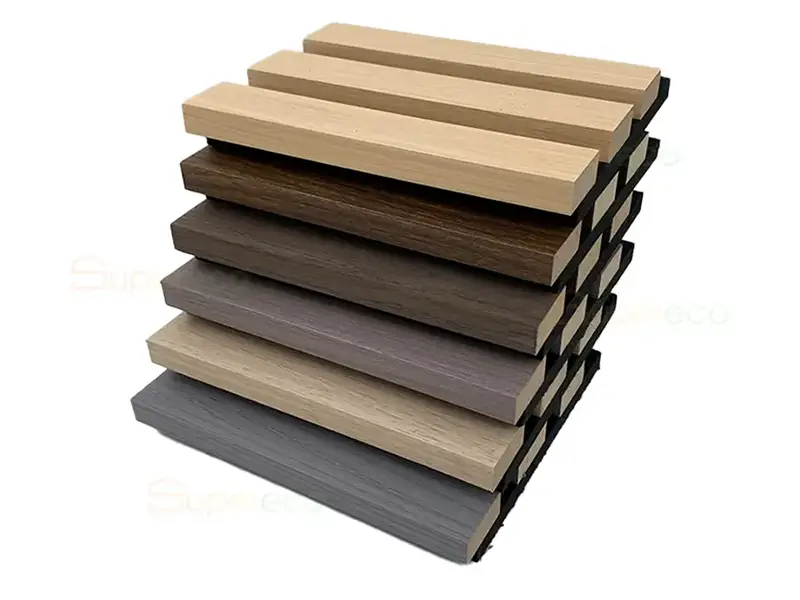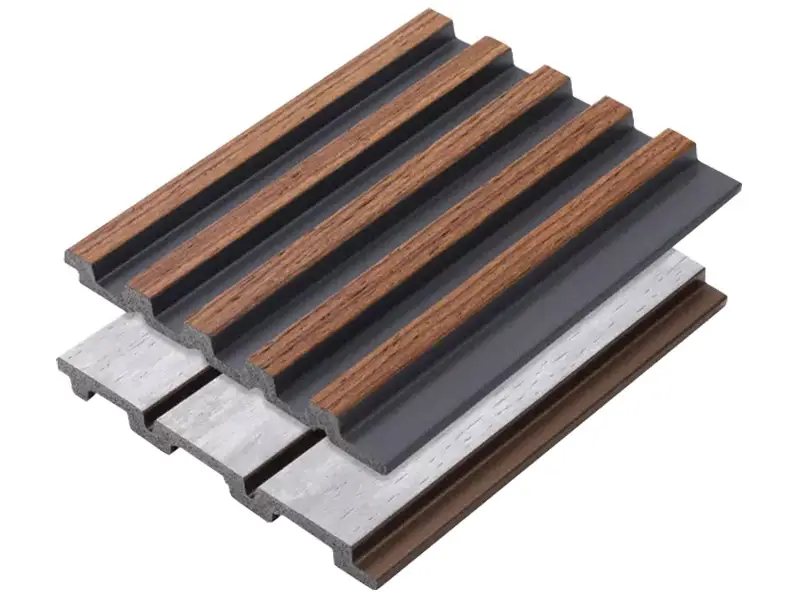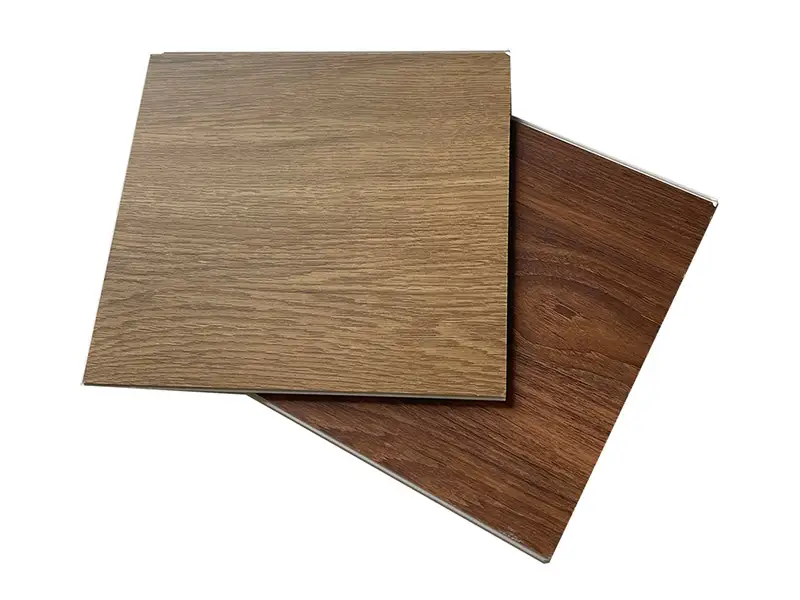
For distributors and wholesalers, bulking WPC fencing is not simply about choosing a fence product and placing an order. The bigger challenge is building a product range that customers can understand, that your warehouse can manage, and that you can replenish when demand grows.
A range with too many profiles, colors, and accessories can create slow-moving inventory. A range that is too limited may make it difficult to meet different customer requirements.
For this reason, B2B buyers need to think about WPC fencing as a product range and replenishment system, rather than a single product.
Here are the key questions to consider when planning a wholesale WPC fencing range.
How Many WPC Fence Products Should a Distributor Stock?
A distributor should start with a focused WPC fence range that matches its target market instead of trying to stock every available profile and color.
The right number of products depends mainly on your customer base, market positioning, warehouse capacity, and expected reorder frequency.
For example, a distributor serving residential customers may need several privacy and decorative options, while a supplier focused on landscaping contractors or commercial projects may need fewer styles but larger quantities of commonly used profiles.
Before expanding the range, consider:
- Which fence styles are most frequently requested by your customers?
- Are your customers mainly homeowners, contractors, developers, or retailers?
- Do they usually purchase complete fence systems or individual components?
- Which colors are already popular in your market?
- How much warehouse space can you allocate to fencing products?
- Which products are likely to generate repeat orders?
Starting with a manageable range also makes inventory control easier. Once you have sales data, you can expand the range based on actual demand rather than assumptions.
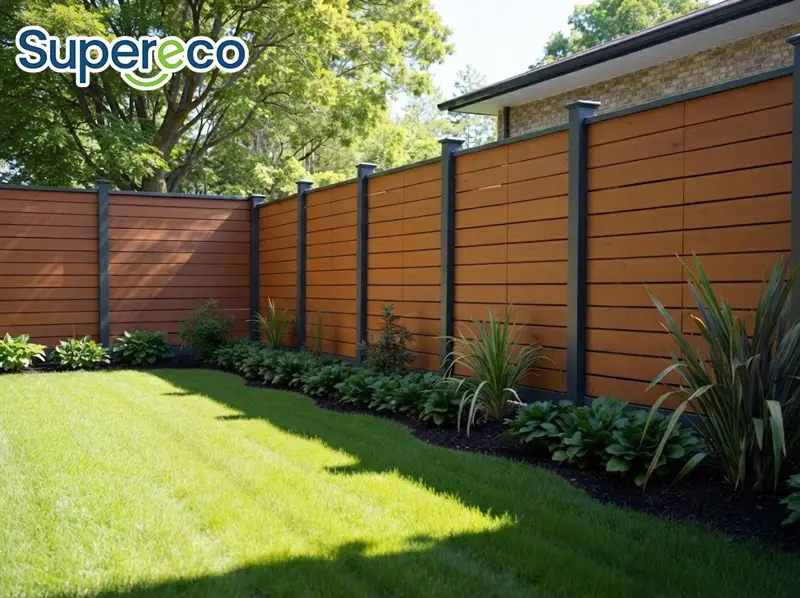
Which WPC Fence Styles Should You Offer First?
The first WPC fence styles you offer should reflect the applications and customer groups you want to serve.
There is no single product configuration that works equally well for every market. Residential privacy fencing, garden fencing, commercial landscaping, and project applications can have different requirements.
Common product directions include:
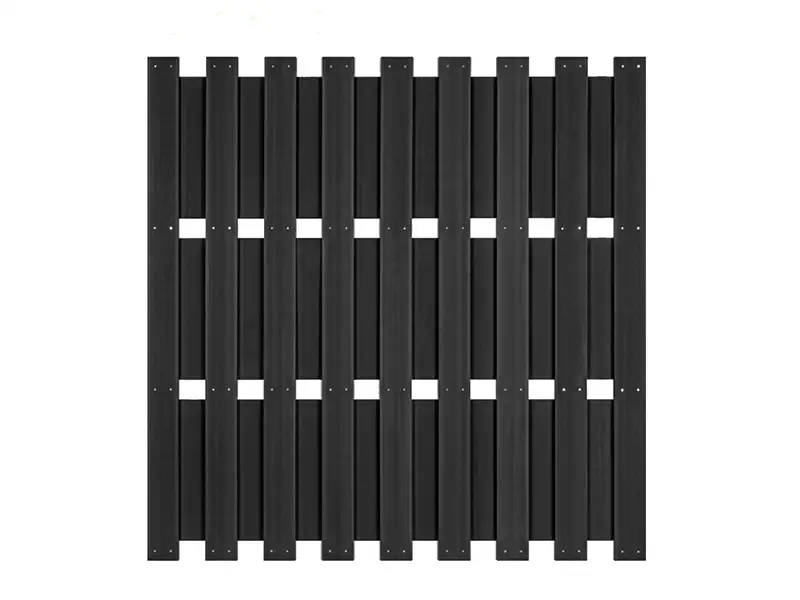
- Privacy fencing for residential properties
- Semi-private fencing for gardens and outdoor areas
- Decorative fencing for landscaping applications
- Horizontal fence systems
- Vertical fence systems
- Solid fence profiles
- Slatted or modern-style designs
The important point for distributors is not simply to offer as many styles as possible. Your initial range should have a clear market position.
For example, if your customers are primarily looking for modern residential fencing, a compact selection of contemporary profiles may be more practical than a large collection of unrelated designs.
A clear product range also makes it easier for your sales team to present products and for customers to compare different options.
Should You Stock Multiple Colors or Start With a Smaller Color Range?
For most distributors, starting with a smaller selection of proven colors can reduce inventory risk while still giving customers enough choice.
Color selection has a direct impact on stock management because every additional color can become another SKU that needs to be forecast, stored, and replenished.
A practical approach is to divide colors into three groups:
Core colors should be the colors you expect to sell regularly and can consider keeping in stock.
Market-specific colors can be added when sales data shows consistent demand in your region.
Custom colors are generally more suitable for project orders or customers with specific branding and design requirements.
This approach allows distributors to offer product variety without turning every possible color into a stock item.
For composite fencing wholesale orders, buyers should also consider whether the fence boards, posts, caps, rails, and other components need to match in color. Color consistency across the complete system becomes particularly important when customers need additional materials later.
Should Gates and Accessories Be Part of Your Wholesale Range?
Yes, if your customers expect a complete fencing solution, gates and compatible accessories should be considered part of the product range rather than treated as separate products.
A WPC fence project may require more than fence boards. Depending on the system, customers may also need:
- Fence posts
- Rails or channels
- Post caps
- Corner components
- Clips and fasteners
- Gate components
- Finishing and connection accessories
For distributors, the key issue is compatibility.
A customer who purchases fence panels but cannot easily obtain the matching posts or accessories may need to source different components from another supplier. This can make installation more complicated and create additional coordination work.
Offering a compatible system can therefore make your product range easier for contractors and project buyers to purchase and install.
It can also create more opportunities for repeat sales because replacement or additional components may be needed after the initial fence order.
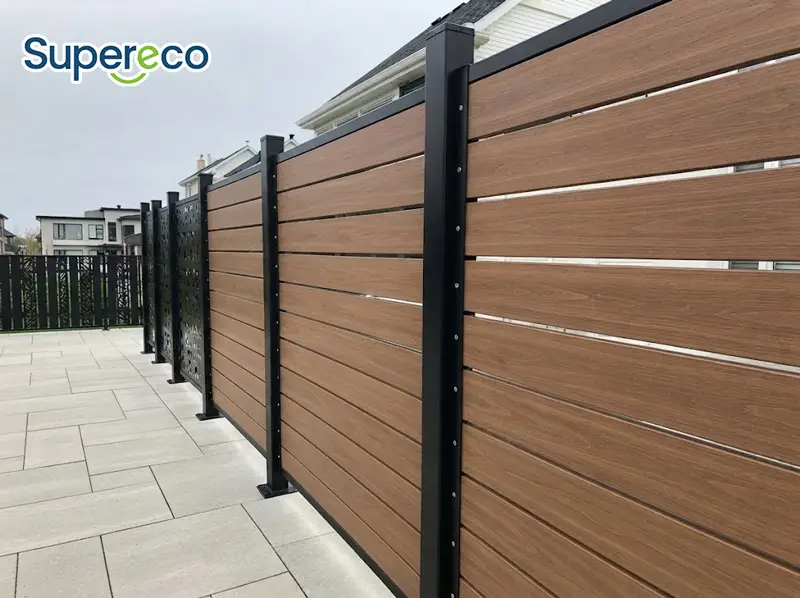
How Should You Plan a Wholesale WPC Fence Order?
A wholesale WPC fence order should be planned around the complete product mix rather than calculating the quantity of fence boards alone.
Before placing an order, distributors should consider the expected demand for each profile, color, and accessory, as well as how the products will be packed and shipped.
For buyers purchasing wpc fence wholesale, the order plan can include:
- Main fence profiles
- Posts and rails
- Matching accessories
- Popular colors
- Project-specific colors
- Standard versus customized products
- Packaging requirements
- Container loading requirements
- Expected sales volume and replenishment needs
For example, a container order may include several fast-moving profiles and colors instead of allocating the same quantity to every SKU.
This allows buyers to use container space more efficiently while reducing the risk of holding large quantities of slow-moving products.
The objective is not simply to maximize the number of products in one shipment. It is to create a product mix that can actually be sold and replenished.
Which Products Should Be Stock Items and Which Should Be Project-Based?
Standard, frequently requested products are generally more suitable for regular stock, while customized products are often better handled as project-based orders.
This distinction can help distributors control inventory risk.
Potential stock items include:
- Regularly requested fence profiles
- Popular colors
- Standard posts and rails
- Common accessories
- Products with predictable reorder demand
Potential project-based items include:
- Custom colors
- Unusual profiles
- Special dimensions
- Custom packaging
- Large project-specific requirements
- Products with uncertain recurring demand
For example, a distributor may keep standard dark and natural colors in stock while purchasing a special project color only after receiving a customer order.
This gives the distributor a broader sales offering without requiring every variation to occupy warehouse space.
The same principle can also apply to customized fence profiles. If a profile is requested only occasionally, it may be more practical to treat it as a project product rather than a permanent inventory item.
How Can Your Product Range Support Repeat Orders?
A WPC fence product range should be planned not only for the first sale, but also for future replacement, extension, and repeat orders.
This is particularly important for distributors supplying contractors, retailers, and project customers.
When a customer returns months or years later, they may need additional fencing that matches the original installation. If the profile, dimensions, color, or accessories are no longer available, the distributor may have difficulty fulfilling the order.
Before adding a product to your regular range, consider whether you can maintain continuity in:
- Product profile
- Dimensions
- Surface texture
- Color
- Matching posts and accessories
- Packaging
- Production specifications
This becomes especially important when supplying projects that may be completed in multiple stages.
A product range that can be replenished consistently is easier to manage than one based entirely on one-time product availability.
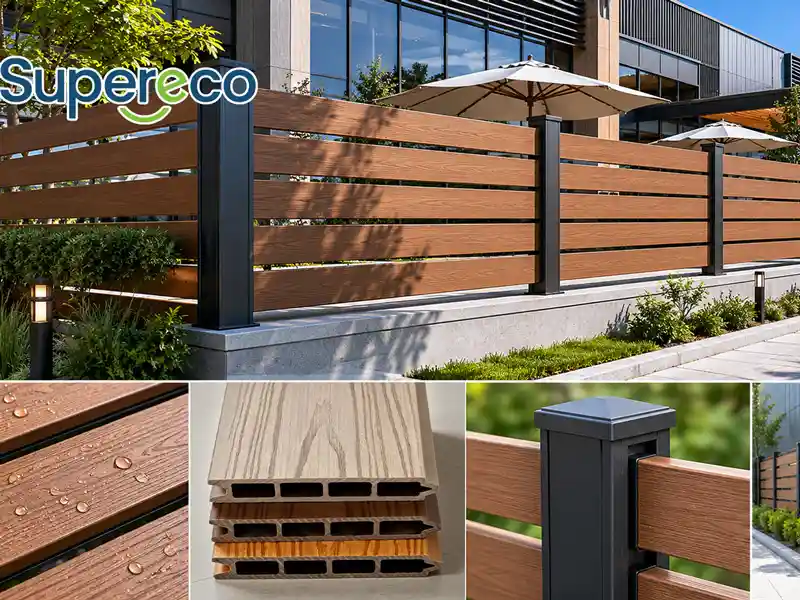
Leading WPC Fencing Manufacturer--Supereco
For distributors, importers, contractors, and project buyers, the goal is to build a WPC fencing range that is easy to sell, replenish, and adapt to different customer requirements.
Supereco is a China-based wpc fencing manufacturer with 20+ years of experience, 120+ production lines, and approximately 300 tons of daily production capacity. The factory supports 200+ containers per month and has supplied products to customers in 70+ countries, providing the production capacity needed for both regular wholesale orders and larger projects.
Supereco offers multiple WPC fence profiles, colors, textures, and related components, with customization available for specific market and project requirements. Quality is supported by an in-house laboratory with CNAS-accredited testing capabilities, along with 63 valid patents, including 27 invention patents.
For buyers looking for a wpc fence supplier china, Supereco provides factory-direct support from product selection and customization to bulk production and repeat orders. The focus is not only on supplying one shipment, but on helping distributors maintain and develop a reliable WPC fencing range.
Supereco WPC Fencing FAQ
What is the MOQ for Supereco WPC fencing?
Supereco’s standard MOQ for WPC fencing is 900 sqm. The actual MOQ may vary depending on the profile, color, customization, and order requirements.
What is the lead time for WPC fencing orders?
The typical lead time is 15–25 days, depending on order quantity, product selection, customization, and production schedule.
Can I order different WPC fence profiles and colors in one order?
Yes. Buyers can combine different profiles and colors based on their order requirements. The available combination depends on the selected products, quantities, and production arrangement.
Can Supereco supply a complete WPC fencing system?
Yes. In addition to fence profiles, Supereco can supply related components such as posts, rails, caps, clips, and other compatible accessories, depending on the selected fencing system.
Does Supereco support OEM and customized WPC fencing?
Yes. Supereco supports customization for suitable orders, including profiles, colors, dimensions, packaging, labels, and other OEM requirements.
How does Supereco handle packaging and container loading?
Packaging and loading can be planned according to the product mix and shipping requirements. Buyers can discuss pallet or non-pallet packing, bundle configuration, container loading quantity, and other packaging requirements before production.
Can I reorder the same WPC fencing product later?
Yes. For repeat orders, buyers can confirm the required profile, color, dimensions, and accessories so the factory can arrange production according to the previous order specifications, subject to product availability and production requirements.
Ready to Build Your WPC Fencing Range?
Planning a composite fencing wholesale order or looking to expand your current product range? Send us your target profiles, colors, estimated quantity, and market requirements.
Get factory pricing, product options, MOQ, and lead time for your WPC fencing order. Request a Factory Quote