For building material wholesalers and commercial contractors in the Middle East and Southeast Asia, the local climate is the ultimate judge of product quality.
While WPC wall panels are favored over traditional timber for their low maintenance, MEA and SEA climates present severe challenges. The Middle East features extreme UV and temperatures over 50°C, while Southeast Asia deals with high humidity above 80% and tropical heat.
In these conditions, inferior WPC products fail rapidly within 12 to 24 months—fading, softening, and warping until interlocking systems break. For importers, this leads to costly callbacks and reputational damage, making it essential to source from a reliable China wpc wall panel factory with proven weatherability.
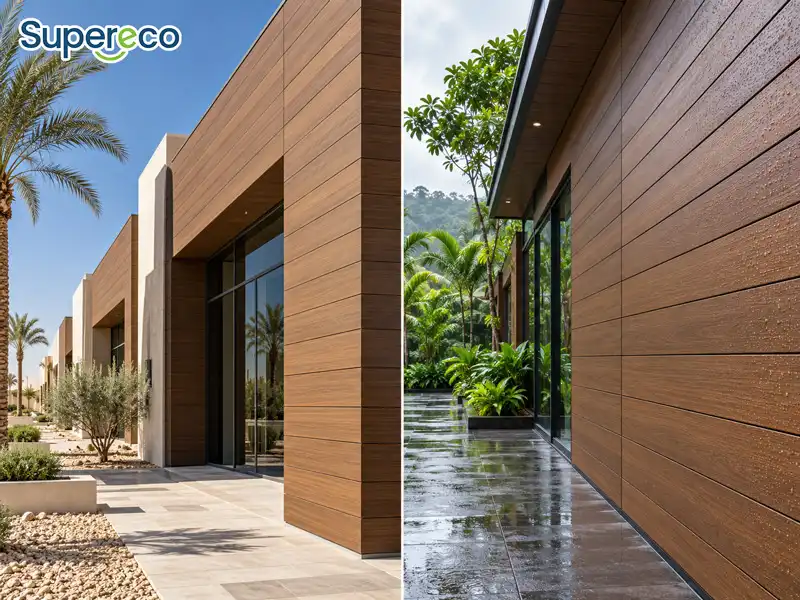
Fighting the Sun: The Invisible Shield of Anti-UV Additives and Color Fastness
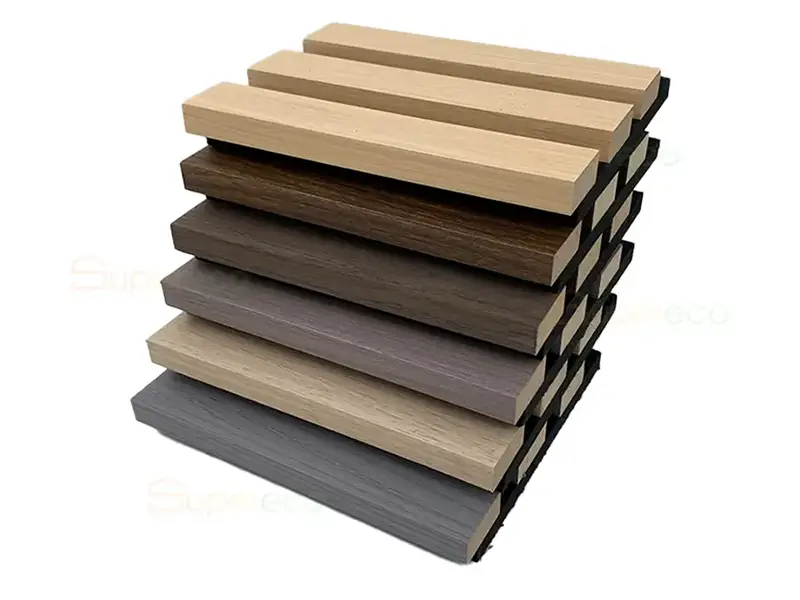
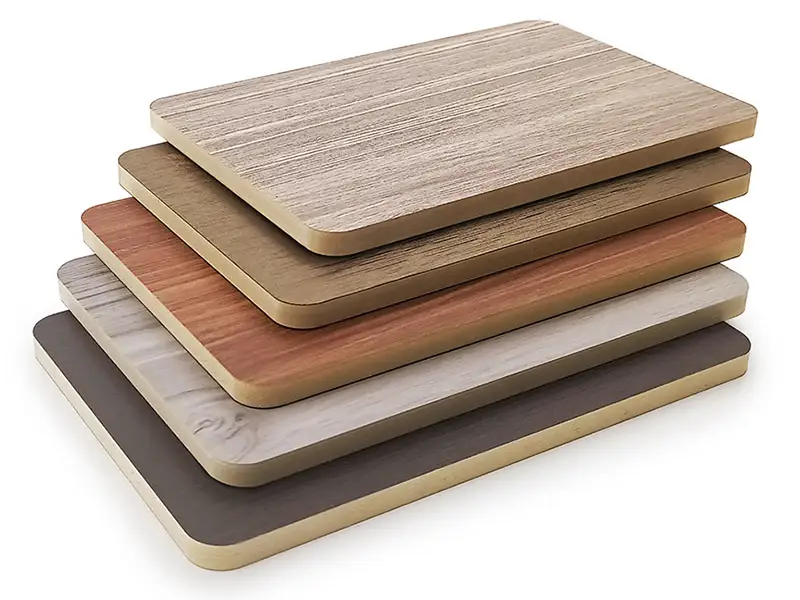
The fading and color changing of WPC wall panels under the intense Middle Eastern sun are essentially caused by UV rays breaking down the plastic components and attacking the wood flour. Many small workshops mix in minimal, low-grade anti-aging agents just to drop their per-ton quotes. This cost-cutting leads to premium walnuts and charcoal greys turning into an unappealing, chalky yellow within two summers.
As an experienced wpc wall panel manufacturer with deep roots in the industry, Supereco engineers its tropical-grade products with two hidden lines of defense to combat harsh light:
Premium Anti-UV Protectors: We blend high-performance ultraviolet stabilizers into the raw material at strict ratios. Acting like a high-factor sunscreen for the wall panels, these additives effectively absorb and dissipate harmful light radiation, preventing the inner plastic matrix from becoming brittle.
High-Grade Lightfast Pigments: Supereco strictly rejects cheap iron oxide pigments, opting instead for professional outdoor-grade colorants with excellent weatherability. Every batch of our products undergoes rigorous daily accelerated weathering tests before leaving the factory to guarantee that the color remains stable over long-term use.
Mastering Thermal Expansion: Grade-A Virgin Material & The Golden Formula
Panel buckling, warping, and bowing are rarely just installation mistakes; they are deeply rooted in the material’s recipe. All plastics expand with heat and contract with cold. In the Middle East, the diurnal temperature swing between freezing desert nights and scorching afternoons can exceed 30°C in a single day, forcing violent physical shifts inside the panels.
To control thermal movement, quality-driven manufacturers like a professional wpc wall panel factory focus on two key aspects:
100% Grade-A Virgin Polymers: Unlike budget products using unstable recycled plastics, premium virgin materials ensure a uniform and stable internal matrix.
The Scientific Raw Material Ratio: Supereco’s Panels use a strict formula (such as 60% wood fiber, 35% HDPE, and 5% additives), where wood fibers act as a skeleton to anchor polymer chains and significantly reduce thermal expansion.
Moisture Barriers: Why High-Humidity Zones Require 2nd-Generation Co-Extrusion
In Southeast Asia, the enemy isn’t just the sun; it is the constant moisture in the air. Traditional first-generation WPC wall panels leave the wood-plastic blend exposed directly to the elements. Over time, high humidity causes the microscopic wood fibers inside the panel to absorb water and swell, leading to internal mold growth and eventual rotting.
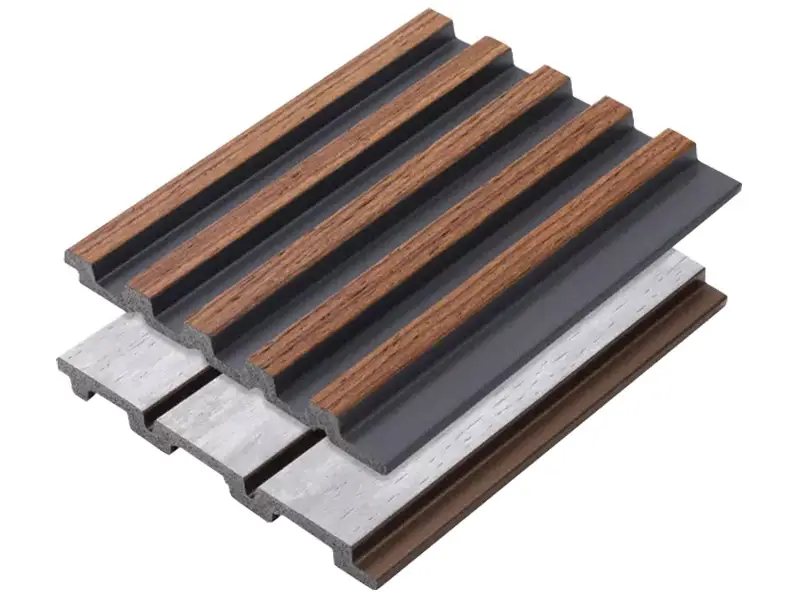
For overseas buyers focused on long-term project quality, we highly recommend Supereco’s 2nd-generation co-extrusion WPC wall panels.
Co-extrusion technology features a 360-degree high-density plastic protective shield that locks out moisture and incorporates advanced UV-blockers for enhanced durability in high-humidity and high-sunlight environments.
Local Installation Standards: The Mandatory "Expansion Gap" Checklist
Proper installation is critical to prevent failure from natural material shifting. Recommended on-site checklist guidelines include:
Butt-Joint Gap Rule: Maintain a 3mm to 5mm expansion gap at every butt-joint in hot climates.
Perimeter Clearance: Leave a 10mm gap at edges meeting floors, ceilings, or pillars.
Joist Spacing: Limit supporting joist spacing to a maximum of 300mm to 350mm in tropical areas.
Conclusion: Choose a Partner Who Engineers for Your Climate
In the B2B building materials industry, buying the cheapest wall panel is a short-term gamble with long-term liabilities. If you are importing container loads of WPC into Dubai, Riyadh, Singapore, or Bangkok, you are not just buying interior decoration—you are buying material science.
Partnering with an experienced China wpc wall panel factory like Supereco ensures 100% grade-A virgin materials and advanced co-extrusion technology, establishing us as your trusted wpc wall panel wholesale partner. Please click below to request samples and test reports: