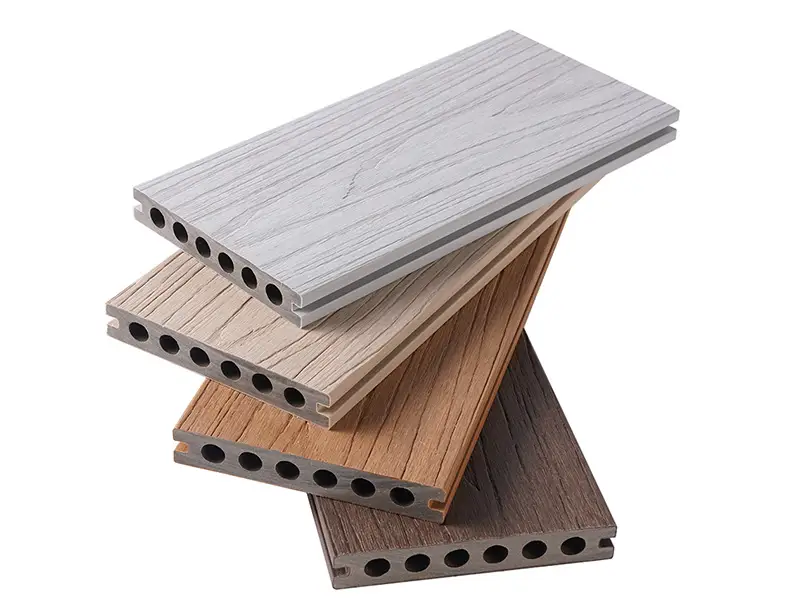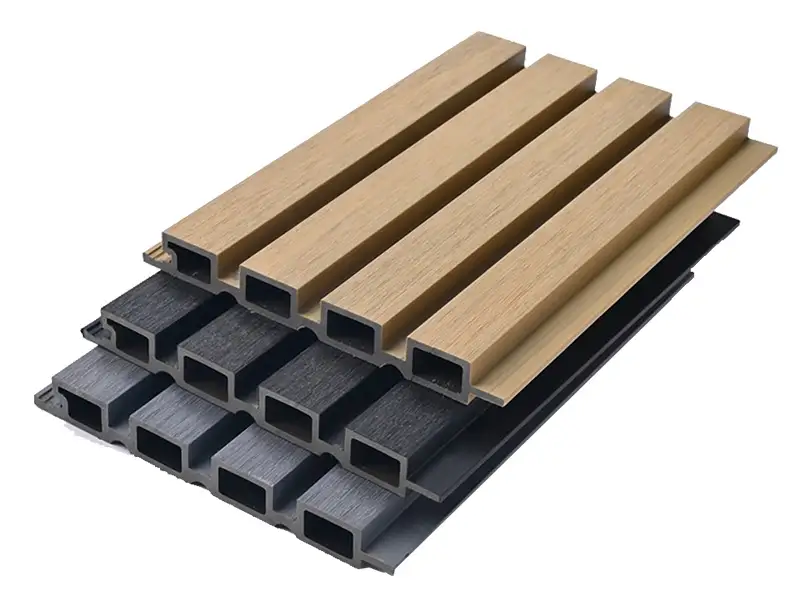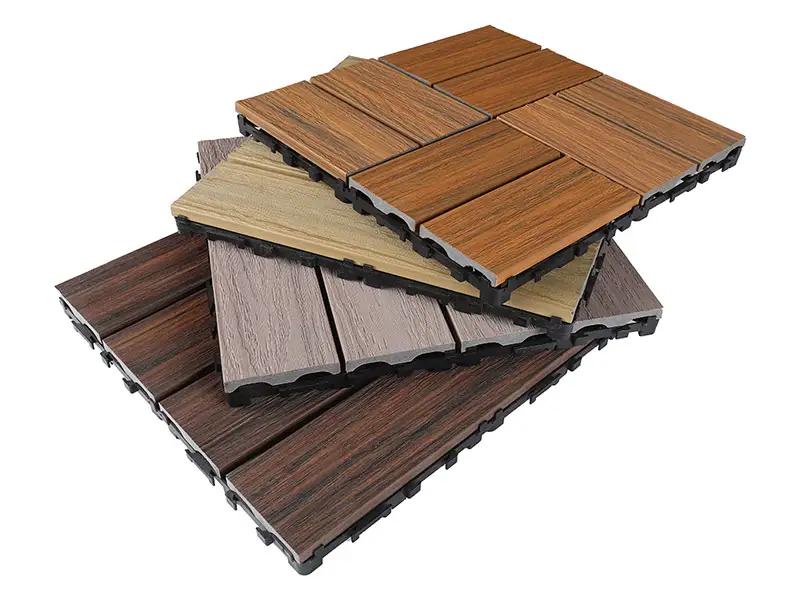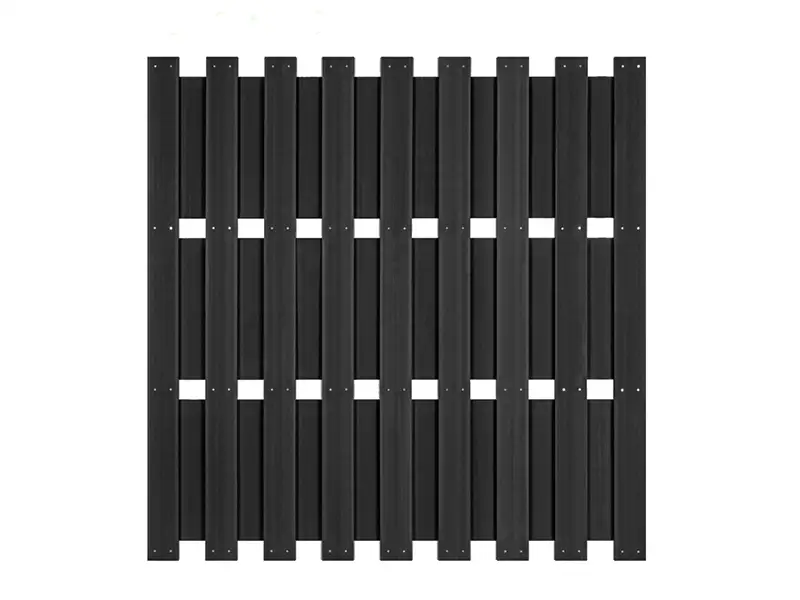
Composite decking has become one of the fastest-growing outdoor building materials worldwide because it offers:
- lower maintenance
- longer lifespan
- better weather resistance
- improved dimensional stability
But despite its advantages, some buyers still experience problems such as:
- color fading
- surface cracking
- swelling
- unstable installation
- peeling co-extrusion layers
The truth is:
Most composite decking problems are not caused by the material itself.
They are usually caused by:
- low-quality raw materials
- poor manufacturing control
- weak co-extrusion technology
- insufficient outdoor testing
For distributors, contractors, and commercial buyers, understanding these risks before purchasing is critical.
This guide explains the most common issues with WPC decking, what causes them, and how reliable manufacturers reduce these problems in real outdoor applications.

Color Fading
The Problem
One of the most common complaints about low-quality outdoor composite decking is uneven fading after prolonged UV exposure.
This problem is especially common in:
- tropical climates
- rooftop projects
- poolside areas
- coastal regions
Low-grade decking may begin losing color consistency within just a few years.
What Causes It?
Color fading is usually related to:
- weak UV stabilizers
- low-quality pigments
- thin protective cap layers
- unstable recycled materials
Some low-cost manufacturers reduce additive content to lower production cost, which directly affects outdoor durability.
How to Avoid It
Choose a professional capped composite decking supplier that provides:
- UV resistance testing
- weather-aging reports
- stable co-extrusion technology
- real outdoor project references
High-quality capped decking generally provides better long-term color stability than
Surface Cracking
Surface cracking is often linked to:
- excessive filler content
- poor formulation balance
- low-grade recycled plastic
- unstable extrusion temperatures
In many cases, manufacturers reduce production cost by sacrificing structural stability.
How to Avoid It
A reliable WPC decking manufacturer should maintain:
- stable material formulation
- controlled extrusion processes
- proper density standards
- mechanical strength testing
For commercial projects, long-term structural stability matters far more than saving a small amount on initial material cost.
Swelling & Water Absorption
The Problem
Some low-quality composite boards absorb moisture over time, leading to:
- swelling
- deformation
- unstable dimensions
This issue becomes more serious in humid or rainy environments.
What Causes It?
Water absorption problems are commonly caused by:
- poorly dried wood fibers
- weak manufacturing control
- inconsistent material density
- insufficient cap protection
How to Avoid It
Experienced composite decking manufacturers carefully control:
- wood fiber moisture content
- extrusion consistency
- board density
- cap layer stability
This is one reason why capped composite decking is increasingly preferred for:
- coastal applications
- poolside projects
- humid climates
- commercial outdoor environments
Weak Co-Extrusion Layer
The Problem
Some capped decking products experience:
- surface peeling
- layer separation
- premature surface wear
after long-term outdoor use.
What Causes It?
This usually happens when manufacturers use:
- overly thin cap layers
- unstable bonding technology
- inconsistent production systems
Not all co-extrusion products provide the same outdoor durability.
How to Avoid It
When sourcing from a co extrusion decking manufacturer, buyers should request:
- cap layer specifications
- adhesion testing reports
- weather resistance data
- long-term outdoor testing results
Reliable suppliers are usually transparent about technical performance standards.
Weak Hidden Fastener Systems
The Problem
Low-quality clips and fastening systems can lead to:
- unstable installations
- board movement
- squeaking noise
- long-term safety concerns
Yet many buyers focus only on decking boards while ignoring accessory quality.
How to Avoid It
Professional composite decking wholesale suppliers usually provide:
- tested fastening systems
- matching accessories
- installation guidance
- project-specific recommendations
A stable installation system is just as important as the decking board itself.

Why Manufacturing Quality Matters More Than Low Pricing
In the global decking industry, products may look similar in catalogs or samples.
But long-term outdoor performance depends heavily on:
- raw material quality
- formulation stability
- manufacturing control
- outdoor testing standards
Reliable manufacturers invest in:
- UV resistance testing
- water absorption testing
- mechanical performance verification
- weather-aging simulation
- product consistency control
rather than competing only on low pricing.
For distributors and contractors, choosing the right supplier can significantly reduce:
- warranty claims
- replacement costs
- project delays
- customer complaints
over the long term.
Why More Buyers Work With Supereco
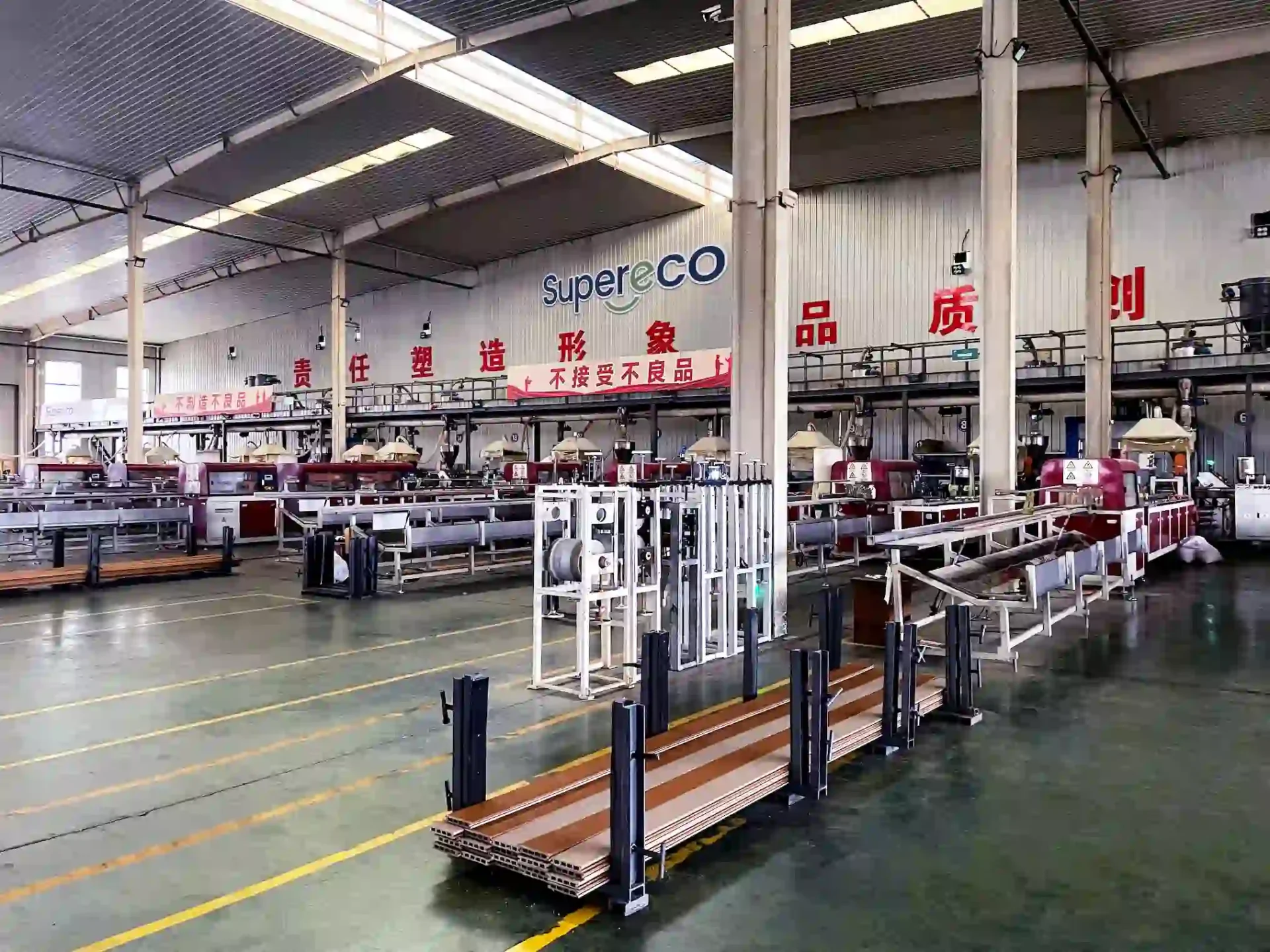
Supereco WPC focuses on large-scale outdoor composite manufacturing for distributors, contractors, wholesalers, and commercial projects worldwide.
Manufacturing Strength
- 20+ Years Manufacturing Experience
- 70+ Countries Served
- 1000+ Completed Projects
- 10M+ WPC Products Delivered
The company supplies:
- WPC decking
- capped composite decking
- WPC wall panels
- WPC fencing systems
- WPC deck tiles
for both residential and commercial outdoor applications.
Technical & Quality Advantages
Supereco supports stable product performance through:
CNAS-Accredited In-House Testing Lab
Used for:
- UV resistance testing
- water absorption testing
- dimensional stability testing
- mechanical performance verification
Third-Party Tested by Intertek & SGS
Independent testing helps verify:
- outdoor durability
- product consistency
- long-term weather resistance
Patented Product Technology
Designed to improve:
- color retention
- structural stability
- installation performance
- outdoor durability
for demanding outdoor environments worldwide.
Final Thoughts
Most common problems with composite decking are preventable.
The key difference usually comes down to:
- manufacturing quality
- raw material standards
- testing capability
- long-term product stability
For distributors, contractors, and project buyers, choosing a reliable composite decking supplier is one of the most important decisions for reducing:
- maintenance issues
- replacement costs
- warranty risks
- customer complaints
The right supplier does not simply sell decking products.
They help ensure reliable outdoor performance for years after installation.