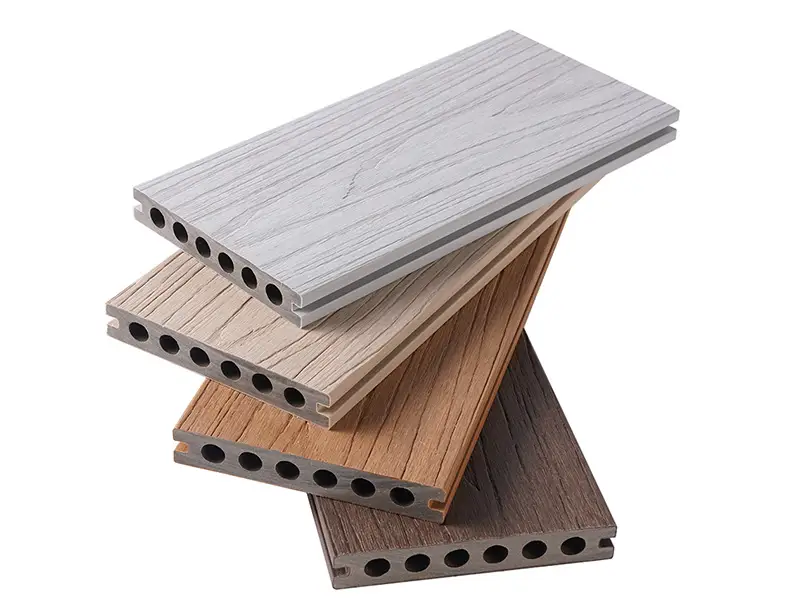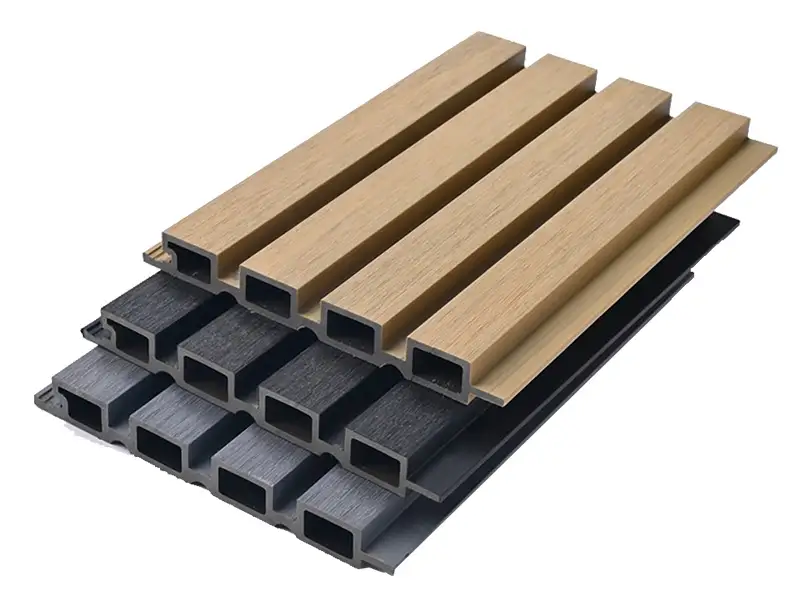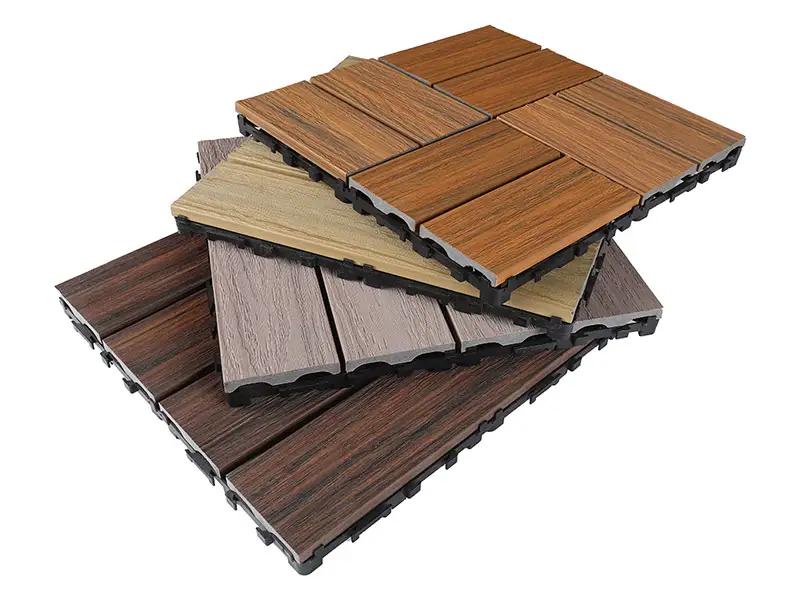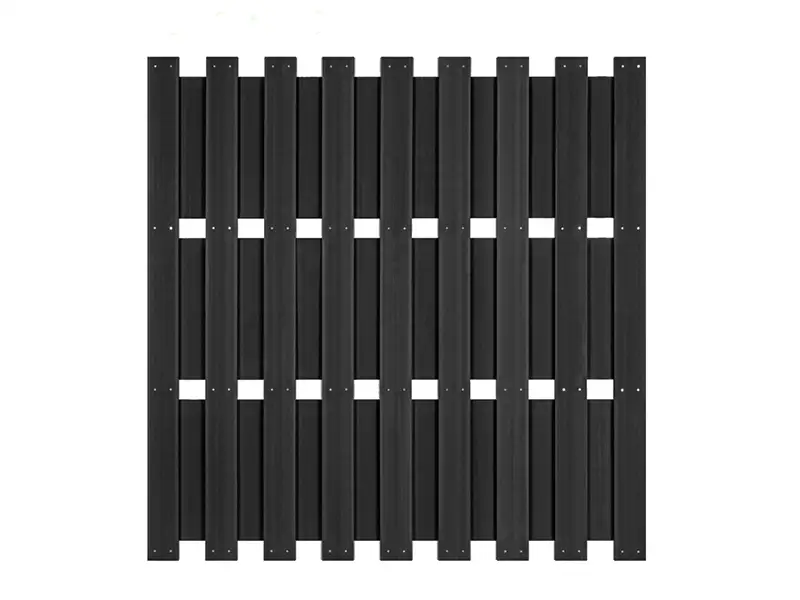
Composite decking has become an established alternative to traditional timber decking across residential developments, commercial properties, hospitality projects, public spaces, and outdoor infrastructure.
For wholesale buyers, however, choosing composite decking is not simply a matter of finding a suitable appearance or the lowest price per square meter. Product construction, surface technology, dimensions, material formulation, quality consistency, environmental exposure, installation requirements, and manufacturing capability can all affect the final purchasing decision.
This is particularly important when sourcing for distribution or project use. A product that performs well as a sample may still create problems if the manufacturer cannot maintain consistent color, dimensions, surface quality, or structural performance across repeated container orders.
This guide explains what composite decking is, how its main product configurations are classified, where it is commonly used, how buyers should evaluate cost and quality, what customization options are available, and what to check before placing a wholesale or bulk order.
What Is Composite Decking and What Is It Made Of?
Composite decking is a wood-plastic composite (WPC) decking material engineered for outdoor use, typically combining wood-based fibers or flour, polymers, and performance additives. It is designed to provide the appearance and usability of timber decking with lower routine maintenance and improved resistance to moisture, weathering, UV exposure, and everyday outdoor use.
The basic material combination is only the starting point.
The performance of a finished decking board depends on how the materials are formulated, processed, extruded, shaped, and finished. Two products can both be sold as WPC decking and still differ considerably in density, strength, dimensional stability, surface durability, color retention, and overall service performance.
For B2B buyers, the most relevant characteristics include:
Low Maintenance
Composite decking generally requires less routine maintenance than conventional timber decking. It does not normally require the same regular staining, painting, or sealing associated with many natural wood products.
This can be particularly valuable for commercial and hospitality applications where ongoing maintenance creates labor and operational costs.
Weather Resistance
Outdoor decking is exposed to rain, humidity, temperature fluctuations, and seasonal weather changes. A properly formulated WPC product is designed to withstand these conditions without the same moisture-related deterioration associated with untreated timber.
Drainage and correct installation remain essential because no decking material should be treated as completely unaffected by environmental exposure.
UV Resistance
Long-term sunlight can cause fading and surface degradation. UV stabilizers, pigments, material formulation, and surface technology all influence how well a decking product retains its appearance.
For buyers supplying markets with strong sunlight, UV performance should be evaluated through relevant technical information rather than relying only on a marketing statement.
Slip-Resistant Surface
Surface texture is particularly relevant to pool surrounds, balconies, walkways, hospitality areas, and other locations that may become wet.
Wood-grain textures, embossed surfaces, and engineered surface profiles can contribute to grip, although actual slip performance should be assessed using the relevant test data for the specific product.
Moisture Resistance
The polymer component of WPC decking reduces the material's susceptibility to moisture compared with conventional untreated wood. However, the performance of the complete system still depends on board design, drainage, installation spacing, ventilation, and environmental conditions.
In practical terms, composite decking should be evaluated as an engineered outdoor system rather than simply as a substitute for wood.
The material formulation, profile structure, surface technology, manufacturing precision, and installation method all contribute to its final performance.
What Are the Main Types of Composite Decking?
Composite decking can be classified according to several independent product characteristics. The most important distinction is between traditional WPC and capped co-extrusion construction, while solid and hollow describe the internal profile structure. These characteristics can be combined, so a decking board can be both capped and hollow or capped and solid.
This distinction is important because these four terms do not represent four mutually exclusive types.
Traditional WPC Decking
Traditional WPC decking uses a composite material structure without a separate polymer cap on the outside.
Its main commercial advantage is a balanced combination of appearance, outdoor performance, and cost. It is commonly considered when buyers need a competitive product for mainstream distribution or projects where premium surface protection is not the primary requirement.
Capped Co-extrusion Decking
Capped composite decking adds a protective polymer layer around the WPC core through a co-extrusion process.
The cap can improve surface protection against moisture, staining, UV exposure, and everyday wear, depending on the specific formulation and manufacturing process.
It is often selected for premium product lines and applications where appearance and surface durability carry greater commercial importance.
Solid Profiles
A solid decking profile has a denser cross-section with more material throughout the board.
The additional material can provide a robust profile and may be appropriate for applications with particular structural or design requirements. The trade-off is greater material consumption and product weight.
Hollow Profiles
Hollow decking profiles contain internal chambers or cavities.
A properly engineered hollow profile can reduce material consumption and weight, making handling, transportation, and material efficiency important considerations. Its suitability depends on the profile design, wall thickness, internal structure, span requirements, and installation specifications.
The easiest way to understand these classifications is:
Surface construction: Traditional WPC or Capped Co-extrusion
Internal structure: Solid or Hollow
This means a manufacturer can develop combinations such as:
- Traditional + Solid
- Traditional + Hollow
- Capped + Solid
- Capped + Hollow
Therefore, buyers should ask suppliers to provide the complete board specification, rather than comparing products based only on a single category name.
Where Is Composite Decking Used?
Composite decking is used in residential, commercial, hospitality, and public outdoor environments where buyers need a durable, low-maintenance decking solution with consistent appearance and predictable installation requirements. The appropriate product specification depends on traffic, environmental exposure, design requirements, structural needs, and budget.
Residential
Typical applications include:
- Patios
- Garden terraces
- Balconies
- Pool surrounds
- Rooftop outdoor spaces
- Private decks
For residential distribution programs, color selection, appearance, maintenance, price, and installation convenience are often important purchasing factors.
Commercial
Commercial applications include:
- Restaurants
- Retail developments
- Office buildings
- Commercial terraces
- Outdoor entertainment areas
Higher foot traffic can increase the importance of surface durability, dimensional consistency, fastening systems, and installation efficiency.
Hospitality
Hotels, resorts, restaurants, and leisure developments commonly use decking around:
- Swimming pools
- Outdoor dining areas
- Resort terraces
- Walkways
- Recreational areas
Appearance and maintenance are especially important because the outdoor environment is part of the customer's experience.
Public & Infrastructure
Applications can include:
- Parks
- Boardwalks
- Marinas
- Waterfront developments
- Public walkways
- Outdoor recreational facilities
These projects may require more detailed consideration of structural performance, slip resistance, weather exposure, local regulations, and expected traffic.
The important procurement principle is:
The application should determine the decking specification.
A residential balcony, hotel pool deck, and public boardwalk should not automatically receive the same product specification.
How Much Does Composite Decking Cost for Wholesale Buyers?
Wholesale composite decking prices are determined by product construction, material formulation, dimensions, profile structure, surface technology, color, order volume, customization, packaging, accessories, and shipping terms. The lowest factory quotation does not necessarily result in the lowest total procurement cost.
For B2B buyers, the price per square meter is only one component of the purchasing calculation.
A more useful approach is to evaluate the total landed and operating cost.
Important cost factors include:
- Product specification
- Traditional or capped construction
- Solid or hollow profile
- Board dimensions
- Surface treatment
- Color development
- MOQ
- Packaging
- Accessories
- Container utilization
- Freight
- Installation requirements
- Potential replacement and quality costs
This becomes particularly important when purchasing bulk composite decking.
For example, a lower-priced product may become less economical if inconsistent dimensions increase installation labor, if color variation creates inventory problems, or if surface defects increase replacement rates.
For composite decking wholesale, buyers should therefore compare the complete supply package rather than simply asking:
"What is your price per square meter?"
A better procurement question is:
"What specification, packaging, accessories, MOQ, lead time, and quality standard are included in this price?"
What Is the Difference Between Traditional and Capped Composite Decking?
Traditional WPC decking consists primarily of the composite core material, while capped co-extrusion decking adds a protective polymer layer to the exterior. Traditional products are generally positioned around cost efficiency, while capped products are commonly selected when enhanced surface protection, appearance, and premium market positioning are priorities.
| Factor | Traditional WPC | Capped Co-extrusion |
|---|---|---|
| Construction | WPC composite structure | WPC core with protective cap |
| Cost Position | More economical | Premium |
| Surface Protection | Standard | Enhanced |
| Stain Resistance | Formulation-dependent | Generally improved |
| UV Protection | Formulation-dependent | Enhanced surface protection |
| Appearance | Wood-like options | Premium surface options |
| Market Position | Mainstream / value | Premium / demanding |
However, capped construction alone does not determine product quality.
Buyers should also evaluate:
- Cap formulation
- Cap thickness and consistency
- Bonding between cap and core
- WPC core formulation
- Extrusion precision
- Dimensional stability
- Surface performance testing
The correct choice depends on the intended application and target market.
For a price-sensitive distribution market, traditional WPC may provide a stronger commercial proposition. For premium retail, hospitality, or demanding project applications, capped decking may justify its higher price through enhanced surface performance and positioning.
How Long Does Composite Decking Last?
The service life of composite decking depends on material formulation, manufacturing quality, environmental exposure, installation, drainage, traffic, and maintenance. Buyers should evaluate technical specifications, test reports, installation requirements, and warranty conditions rather than relying on a single advertised lifespan.
The major environmental factors include:
- UV exposure
- Rain and humidity
- Temperature fluctuations
- Freeze-thaw cycles
- Foot traffic
- Surface abrasion
- Long-term moisture exposure
Installation can also have a significant impact.
Incorrect joist spacing, insufficient ventilation, poor drainage, inadequate expansion gaps, or incompatible fastening systems can reduce the long-term performance of otherwise well-manufactured decking.
For this reason, an experienced wpc decking manufacturer should provide installation recommendations together with product specifications.
A serious buyer should ask:
What environmental conditions was the product designed for, what testing has been completed, and what installation conditions are required?
That provides a much more useful basis for procurement than comparing headline lifespan claims.
How Can Buyers Tell if Composite Decking Is High Quality?
The quality of composite decking should be evaluated through material consistency, profile structure, dimensional accuracy, surface quality, performance testing, and manufacturing quality control. A good-looking sample or low purchase price is not sufficient evidence of consistent production quality.
For importers and distributors, repeat-order consistency is one of the most important indicators.
A supplier should be able to demonstrate control over:
Material
Check how the manufacturer controls raw materials, formulation ratios, pigments, stabilizers, and additives.
Structure
Review:
- Solid or hollow profile
- Wall thickness
- Internal ribs
- Board weight
- Recommended joist spacing
Dimensions
Check:
- Width
- Thickness
- Length
- Straightness
- Tolerances
Surface
Inspect:
- Color consistency
- Wood-grain pattern
- Embossing
- Edge quality
- Visible defects
- Surface uniformity
Performance
Depending on the application and destination market, buyers may request information relating to:
- Flexural performance
- UV resistance
- Moisture resistance
- Slip resistance
- Weathering
- Dimensional stability
Production Consistency
The most important test is whether the approved sample can be reproduced consistently across future production batches.
A reliable composite decking manufacturer should have inspection procedures covering raw materials, production, dimensions, appearance, finishing, packaging, and final products.
For B2B procurement, one question is particularly valuable:
Can you guarantee that repeat orders will follow the same approved specification and quality standard?
What Certifications and Test Reports Should Buyers Request?
B2B buyers should request certifications and test reports relevant to the exact decking product, destination market, and intended application. Depending on the market and product scope, documentation may include FSC®, CE, ISO 9001, third-party testing, factory audits, and applicable performance reports.
The key is to understand what each document actually proves.
FSC® relates to responsible forestry and chain-of-custody requirements. CE marking applies to relevant European product legislation and should not be interpreted as a universal quality certification. SGS and Intertek can conduct product testing or verification according to specific standards and test scopes.
Therefore, buyers should verify:
- Product name
- Model or specification
- Test standard
- Testing organization
- Test date
- Performance measured
- Applicable market
A certificate without a clear connection to the product being purchased has limited value for procurement decisions.
Can Composite Decking Be Customized for Different Markets and Projects?
Yes. Supereco supports custom composite decking development for buyers who need market-specific colors, surface finishes, profiles, dimensions, board structures, or OEM production rather than simply selecting standard catalog products. Customization can be developed from a commercial requirement, technical drawing, or physical sample.
For many B2B buyers, customization is not primarily about putting a logo on a standard board.
It may be driven by a specific market requirement.
A distributor may need a particular color collection to match the preferences of its local market.
A project may specify a particular thickness, width, groove, or surface texture.
A brand owner may need a proprietary appearance that differentiates its product line from competing products.
Supereco's customization capabilities cover several parts of the product.
Custom Colors
Supereco offers 40+ composite decking colors across its product range, covering established wood-inspired tones as well as more contemporary options.
For buyers targeting Europe, North America, Australia, and other mature outdoor-living markets, popular WPC decking colors generally fall into several commercially proven families:
- Light Grey / Silver Grey – clean, contemporary, and widely used in modern architecture
- Charcoal / Dark Grey – premium appearance and strong contrast with light-colored buildings
- Teak / Medium Brown – a familiar timber-inspired choice
- Walnut / Dark Brown – warmer and more traditional
- Natural Wood / Oak Tones – designed to retain a timber-like visual character
- Mixed / Multi-Tone Colors – increasingly used to create a more natural variation across the board surface
Color demand still varies by country, architectural style, and product positioning. Buyers developing a new range should therefore avoid selecting colors simply because they are currently popular elsewhere.
Supereco can support custom color matching, allowing buyers to develop colors around existing product collections, project specifications, architectural requirements, or brand positioning.
Custom Surface Finishes
Surface appearance can be developed according to the desired market position and application, including:
- Flat finishes
- Wood-grain textures
- 3D embossed surfaces
- Co-extrusion surfaces
For buyers developing premium collections, surface texture can be as important as color because it influences both visual realism and tactile perception.
Custom Profiles and Dimensions
Supereco can support customized:
- Solid profiles
- Hollow profiles
- M-Groove designs
- Thickness
- Length
- Other profile specifications
This is particularly useful when the decking needs to integrate with a specific installation system or project requirement.
Drawing-Based and Sample-Based OEM
Supereco supports OEM development based on:
Technical Drawings: Buyers can provide dimensions, profile geometry, surface requirements, and other technical specifications.
Physical Samples: Existing decking samples can be used as a reference for developing a corresponding production specification.
This allows buyers to move from a standard catalog purchase toward a product developed specifically for their market or project.
Branding and Packaging
Customization can also extend beyond the decking board itself:
- Logo printing
- Product labels
- Custom packaging
- Private label
For distributors and brand owners, this makes it possible to develop a more complete market-ready product rather than simply reselling a generic SKU.
The key advantage of OEM is therefore not customization for its own sake.
It is the ability to align:
Market Demand → Product Specification → Appearance → Performance → Packaging → Brand Positioning
What Accessories Are Needed for a Complete Composite Decking System?
A complete composite decking system normally requires compatible substructure and installation components in addition to the decking boards, including joists, hidden clips, fasteners, trims, and edge-finishing products. Compatibility between these components is important for installation quality and long-term performance.
A typical system may include:
- Joists
- Hidden clips
- Fasteners
- Corner trims
- Edge banding
Buyers should confirm that the fastening system matches the board profile and that joist spacing follows the manufacturer's installation recommendations.
For distributors, sourcing compatible accessories from the same supplier can also simplify:
- Inventory management
- Product matching
- Installation support
- Customer service
- Project quotations
A complete decking solution should therefore be evaluated as a system rather than as an individual board.
How Should Wholesale Buyers Choose a Composite Decking Supplier?
The right WPC decking supplier should combine manufacturing capability, stable quality, product development, customization, certifications, production capacity, export experience, and reliable delivery. For long-term B2B buyers, manufacturing consistency and supply capability are generally more important than the lowest initial quotation.
A supplier evaluation should cover several areas.
Manufacturing Experience
Suppliers with established production experience are generally better positioned to handle product development, quality consistency, and repeat production.
Production Capacity
Capacity matters when an importer moves from trial orders to regular container purchasing.
A factory should be able to explain how it manages production scheduling, quality control, and delivery during periods of high demand.
Product Development
Buyers should determine whether the supplier can support both standard products and customized specifications.
Quality Control
Ask for information about:
- Incoming material inspection
- In-process inspection
- Dimensional inspection
- Surface inspection
- Final inspection
- Packaging inspection
Export Experience
International supply involves more than producing the product. Documentation, packaging, container loading, shipping coordination, and communication all affect the purchasing experience.
Supereco's Manufacturing Capability
Supereco is a China-based manufacturer specializing in WPC outdoor building products, with WPC decking as one of its core product categories. Its wider outdoor portfolio also includes HDPE outdoor furniture, so the company operates across multiple outdoor product categories rather than positioning itself exclusively around one decking SKU.
Supereco has more than 20 years of composite manufacturing experience and operates more than 120 production lines, providing the production infrastructure required for both standard product programs and customized B2B orders.
Its manufacturing and shipping capability can support volumes of approximately 200 containers per month, which is particularly relevant to importers and distributors who need repeat supply as their market grows.
Supereco has supplied products to buyers in 70+ countries, including the USA, Australia, Europe, and South America.
Its WPC decking range includes both traditional WPC decking and capped co-extrusion decking, with customization available across colors, profiles, dimensions, surface finishes, and board structures.
For OEM buyers, production can be developed from drawings or physical samples, with additional support for logo printing, labels, custom packaging, and private-label programs.
Quality management covers multiple inspection stages from incoming materials through production and finished-product inspection. Supereco also maintains certifications, management systems, factory audits, and third-party testing credentials including FSC®, CE, ISO 9001, Sedex, BSCI, SGS, Intertek, and CNAS, according to the applicable product and certification scope.
For B2B buyers, the value of an established composite decking manufacturer is therefore not limited to factory pricing.
The more important capability is the ability to manage the complete supply chain:
Product Specification → Sampling → OEM Development → Production → Quality Control → Packaging → Bulk Shipment
Supereco Composite Decking FAQ for Wholesale Buyers
What is the MOQ for Supereco composite decking?
The standard MOQ for Supereco WPC decking is 900 square meters. Customized products, colors, profiles, packaging, or special OEM requirements may require additional confirmation depending on the production specification.
What is the production lead time?
The typical production lead time for Supereco WPC decking is approximately 15–25 days after order and specification confirmation. The actual schedule can vary according to product type, order volume, customization, and production planning.
Does Supereco offer both traditional and capped composite decking?
Yes. Supereco offers both traditional WPC decking and capped co-extrusion decking, allowing buyers to select products according to target market, performance requirements, and price positioning.
Can Supereco develop custom colors?
Yes. Supereco offers 40+ decking colors and supports custom color matching for OEM and project requirements. Buyers can provide a reference color, existing product sample, or other specification for development assessment.
Can Supereco customize decking profiles and dimensions?
Yes. Supereco can support customization of profiles, dimensions, thickness, lengths, groove designs, and solid or hollow structures, depending on the project and production requirements.
Can Supereco manufacture according to drawings or samples?
Yes. Supereco supports both drawing-based and sample-based OEM development. Buyers can provide technical drawings or physical samples as the basis for developing a production specification.
Does Supereco provide private-label packaging?
Yes. Supereco can support B2B branding and packaging requirements including logo printing, product labels, custom packaging, and private-label programs.
Can Supereco supply decking accessories?
Yes. Compatible decking-system components can include joists, hidden clips, corner trims, edge banding, and other installation accessories, subject to the product specification.
Which markets does Supereco export to?
Supereco supplies buyers in more than 70 countries, including the USA, Australia, European markets, and South America. This international export experience supports buyers who require ongoing container supply and international shipping coordination.
Final Takeaway: What Should B2B Buyers Look for in Composite Decking?
The best composite decking product is not necessarily the most expensive product or the one with the lowest factory price.
For wholesale buyers, the right choice depends on how well the product matches the intended market, application, performance requirements, price position, and supply strategy.
Traditional WPC can provide a strong cost-performance balance. Capped co-extrusion can offer enhanced surface protection for premium positioning. Solid and hollow profiles provide different structural and material-efficiency options.
Customization can also be much broader than branding. Colors, textures, profiles, dimensions, structures, packaging, and OEM development can all be used to create a product better suited to a specific market or project.
When evaluating a WPC decking supplier, buyers should therefore consider five factors together:
Product Performance + Quality Consistency + Total Cost + Customization Capability + Supply Reliability
For importers, distributors, contractors, and project buyers, this approach provides a more reliable basis for sourcing composite decking wholesale and planning long-term bulk composite decking programs.