WPC Decking Manufacturer

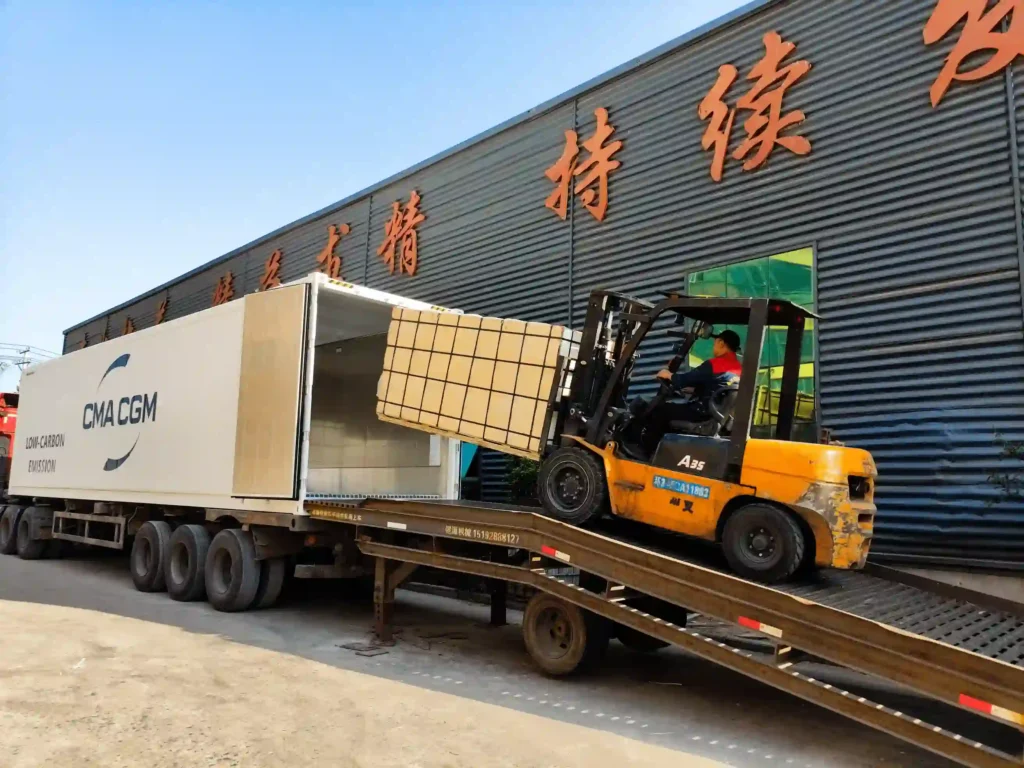
Forklift loading packed WPC decking products into a shipping container at Supereco factory for international bulk export

Common Problems With Composite Decking — And How to Avoid Them

Composite decking has become one of the fastest-growing outdoor building materials worldwide because it offers: lower maintenance longer lifespan better weather resistance improved dimensional stability But despite its advantages, some buyers still experience problems such as: color fading surface cracking swelling unstable installation peeling co-extrusion layers The truth is: Most composite decking problems are not caused by the material itself. They are usually caused by: low-quality raw materials poor manufacturing control weak co-extrusion technology insufficient outdoor testing For distributors, contractors, and commercial buyers, understanding these risks before purchasing is critical. This guide explains the most common issues with WPC decking, what causes them, and how reliable manufacturers reduce these problems in real outdoor applications. Color Fading The Problem One of the most common complaints about low-quality outdoor composite decking is uneven fading after prolonged UV exposure. This problem is especially common in: tropical climates rooftop projects poolside areas coastal regions Low-grade decking may begin losing color consistency within just a few years. What Causes It? Color fading is usually related to: weak UV stabilizers low-quality pigments thin protective cap layers unstable recycled materials Some low-cost manufacturers reduce additive content to lower production cost, which directly affects outdoor durability. How to Avoid It Choose a professional capped composite decking supplier that provides: UV resistance testing weather-aging reports stable co-extrusion technology real outdoor project references High-quality capped decking generally provides better long-term color stability than Surface Cracking Surface cracking is often linked to: excessive filler content poor formulation balance low-grade recycled plastic unstable extrusion temperatures In many cases, manufacturers reduce production cost by sacrificing structural stability. How to Avoid It A reliable WPC decking manufacturer should maintain: stable material formulation controlled extrusion processes proper density standards mechanical strength testing For commercial projects, long-term structural stability matters far more than saving a small amount on initial material cost. Swelling & Water Absorption The Problem Some low-quality composite boards absorb moisture over time, leading to: swelling deformation unstable dimensions This issue becomes more serious in humid or rainy environments. What Causes It? Water absorption problems are commonly caused by: poorly dried wood fibers weak manufacturing control inconsistent material density insufficient cap protection How to Avoid It Experienced composite decking manufacturers carefully control: wood fiber moisture content extrusion consistency board density cap layer stability This is one reason why capped composite decking is increasingly preferred for: coastal applications poolside projects humid climates commercial outdoor environments Weak Co-Extrusion Layer The Problem Some capped decking products experience: surface peeling layer separation premature surface wear after long-term outdoor use. What Causes It? This usually happens when manufacturers use: overly thin cap layers unstable bonding technology inconsistent production systems Not all co-extrusion products provide the same outdoor durability. How to Avoid It When sourcing from a co extrusion decking manufacturer, buyers should request: cap layer specifications adhesion testing reports weather resistance data long-term outdoor testing results Reliable suppliers are usually transparent about technical performance standards. Weak Hidden Fastener Systems The Problem Low-quality clips and fastening systems can lead to: unstable installations board movement squeaking noise long-term safety concerns Yet many buyers focus only on decking boards while ignoring accessory quality. How to Avoid It Professional composite decking wholesale suppliers usually provide: tested fastening systems matching accessories installation guidance project-specific recommendations A stable installation system is just as important as the decking board itself. Why Manufacturing Quality Matters More Than Low Pricing In the global decking industry, products may look similar in catalogs or samples. But long-term outdoor performance depends heavily on: raw material quality formulation stability manufacturing control outdoor testing standards Reliable manufacturers invest in: UV resistance testing water absorption testing mechanical performance verification weather-aging simulation product consistency control rather than competing only on low pricing. For distributors and contractors, choosing the right supplier can significantly reduce: warranty claims replacement costs project delays customer complaints over the long term. Why More Buyers Work With Supereco Supereco WPC focuses on large-scale outdoor composite manufacturing for distributors, contractors, wholesalers, and commercial projects worldwide. Manufacturing Strength 20+ Years Manufacturing Experience 70+ Countries Served 1000+ Completed Projects 10M+ WPC Products Delivered The company supplies: WPC decking capped composite decking WPC wall panels WPC fencing systems WPC deck tiles for both residential and commercial outdoor applications. Technical & Quality Advantages Supereco supports stable product performance through: CNAS-Accredited In-House Testing Lab Used for: UV resistance testing water absorption testing dimensional stability testing mechanical performance verification Third-Party Tested by Intertek & SGS Independent testing helps verify: outdoor durability product consistency long-term weather resistance Patented Product Technology Designed to improve: color retention structural stability installation performance outdoor durability for demanding outdoor environments worldwide. Final Thoughts Most common problems with composite decking are preventable. The key difference usually comes down to: manufacturing quality raw material standards testing capability long-term product stability For distributors, contractors, and project buyers, choosing a reliable composite decking supplier is one of the most important decisions for reducing: maintenance issues replacement costs warranty risks customer complaints The right supplier does not simply sell decking products. They help ensure reliable outdoor performance for years after installation.

Common Problems With Composite Decking — And How to Avoid Them Read More »
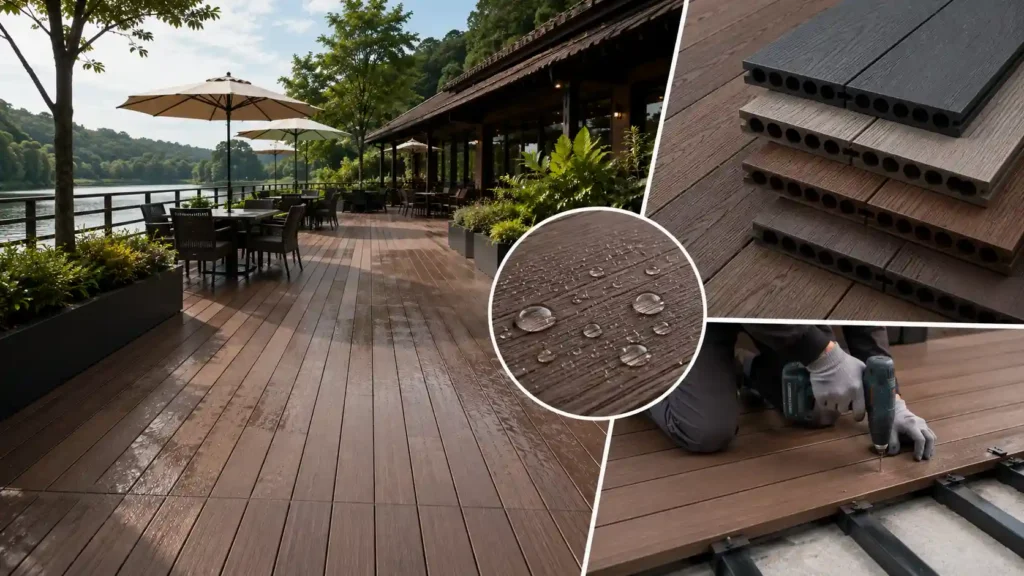
wpc decking for commercial projects & wholesale designed for large scale outdoor projects

Composite Decking vs Wood Decking: Which Is Better for Your Project?

For years, wood decking was the default choice for outdoor spaces. Today, more distributors, contractors, resorts, and developers are switching to composite decking for one reason: Lower long-term cost with more stable outdoor performance. The real comparison is no longer: “Which material looks better?” The real question is: Which material lasts longer? Which requires less maintenance? Which reduces future replacement costs? Which creates fewer customer complaints? Which performs better in harsh outdoor environments? This is why composite decking vs wood decking has become one of the most searched topics among global outdoor building material buyers. The answer depends on: project type climate maintenance expectations installation requirements long-term operating cost This guide breaks down the real differences between wood and modern WPC decking, helping buyers choose the right material based on long-term project value — not just initial price. Quick Comparison: Composite Decking vs Wood Decking Factor Composite Decking Wood Decking Maintenance Low High Lifespan 20–30 Years 8–15 Years Waterproof Performance Excellent Limited Cracking & Warping Minimal Common UV Resistance Strong Fades Over Time Surface Splinters No Yes Anti-Termite Performance Excellent Vulnerable Installation Stability High Moderate Long-Term Cost Lower Higher Eco-Friendliness Recycled Materials Natural Timber Consumption For commercial projects and wholesale applications, long-term maintenance and replacement costs often matter more than initial material pricing. This is one of the biggest reasons global demand for composite decking wholesale products continues to grow. What Is Composite Decking? Composite decking is an engineered outdoor material made from: recycled HDPE plastic wood fibers UV stabilizers performance additives Unlike traditional wood, modern outdoor composite decking is designed to improve: weather resistance dimensional stability moisture protection long-term durability Today, composite decking is widely used for: resorts hotels rooftop decks restaurants poolside projects commercial outdoor spaces residential patios Many buyers working with a professional composite decking manufacturer now prioritize lifecycle value over short-term cost savings. Maintenance: The Biggest Long-Term Difference Maintenance is where wood and composite differ the most. Wood Decking Typically Requires: staining sealing sanding repainting anti-rot treatment termite protection Without ongoing maintenance, wood is more likely to: crack warp absorb moisture fade develop mold This becomes expensive for: resorts restaurants public spaces large commercial projects By comparison, modern WPC decking requires minimal maintenance beyond routine cleaning. For distributors and contractors, this usually means: fewer warranty claims lower replacement costs better long-term customer satisfaction Weather Resistance & Outdoor Durability Outdoor materials must survive: rain UV exposure humidity temperature fluctuations heavy foot traffic Traditional wood naturally expands and contracts when exposed to moisture. Over time, this often causes: cracking deformation structural movement unstable surfaces Modern capped composite decking is specifically engineered to reduce these issues. Its protective polymer layer improves: UV resistance stain resistance moisture resistance scratch resistance color stability This is why many developers now prefer sourcing from a professional capped composite decking supplier for demanding outdoor environments. Especially in: coastal regions tropical climates swimming pool projects humid environments composite materials generally provide more stable long-term performance. Installation Efficiency Matters More Than Most Buyers Realize For commercial projects, installation problems directly affect: labor cost project timelines after-sales service contractor efficiency Wood decking often requires: additional surface treatment more frequent alignment adjustment ongoing maintenance planning Modern systems from an experienced WPC decking manufacturer usually provide: hidden fastener systems consistent board dimensions simplified installation improved structural stability For contractors and distributors, installation efficiency directly impacts project profitability. Long-Term Cost: Where Composite Decking Often Wins Many buyers initially focus on material price per square meter. Experienced project buyers focus on: maintenance cost replacement frequency labor expenses operational lifespan lifecycle value Wood decking may appear cheaper upfront. But over time, additional costs often include: refinishing repairs board replacement maintenance labor This is why many buyers sourcing from a composite decking supplier evaluate total ownership cost instead of only initial purchasing price. For commercial projects, composite decking often becomes the more economical long-term solution. Appearance: Natural Wood vs Modern Composite Technology Wood decking offers natural grain variation and traditional visual appeal. However, natural timber appearance changes significantly over time due to: UV exposure moisture weather aging Modern co extrusion decking manufacturer technology has significantly improved composite aesthetics. Today’s premium composite decking can provide: realistic wood grain textures embossed finishes multi-tone color systems matte surface appearance while maintaining better long-term consistency. For commercial outdoor spaces, appearance stability over time is often more important than natural variation. Which Material Is Better for Different Projects? Wood Decking Is Often Better For: rustic residential projects traditional aesthetics low-traffic applications short-term budget projects Composite Decking Is Often Better For: resorts & hotels commercial outdoor projects rooftop decks restaurants & cafes poolside areas distributors & wholesale projects humid or coastal climates low-maintenance outdoor spaces This is why demand for composite decking wholesale products continues growing globally. Common Misconceptions About Composite Decking “Composite Decking Looks Artificial” Older-generation products often lacked realistic texture. Modern manufacturing technology now offers: deep embossing realistic wood textures natural matte finishes multi-color surface designs that more closely replicate natural timber. “Composite Decking Gets Too Hot” Surface temperature depends on: color selection sun exposure local climate ventilation Lighter colors and proper installation spacing significantly improve comfort. “Composite Decking Is Too Expensive” Initial pricing may be higher than standard wood. But many buyers underestimate: maintenance savings reduced labor costs longer lifespan lower replacement frequency Over time, composite decking often provides stronger overall project value. Why Global Buyers Choose Supereco Supereco WPC focuses on large-scale outdoor composite manufacturing for distributors, contractors, wholesalers, and commercial projects worldwide. Key Manufacturing Data 20+ Years Manufacturing Experience 70+ Countries Served 1000+ Completed Projects 10M+ WPC Products Delivered The company provides: WPC decking capped composite decking WPC wall panels WPC fencing systems WPC deck tiles for both residential and commercial outdoor applications. Technical & Quality Strength Supereco supports stable product quality through: CNAS-Accredited In-House Testing Lab Used for: UV resistance testing dimensional stability testing water absorption testing mechanical performance verification Third-Party Tested by Intertek & SGS Independent testing helps verify: outdoor durability product consistency long-term weather performance Patented Product Technology Designed to

Composite Decking vs Wood Decking: Which Is Better for Your Project? Read More »

How to Choose a Reliable Composite Decking Supplier in China

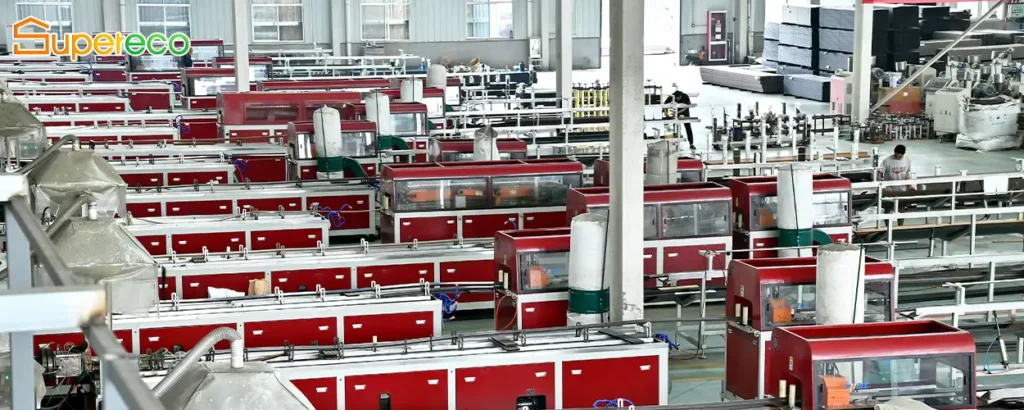
Global demand for composite decking continues to grow as distributors, contractors, builders, and outdoor living brands look for materials that offer lower maintenance, longer lifespan, and more stable outdoor performance than traditional wood. But while sourcing from China can offer strong manufacturing advantages and competitive pricing, many buyers still face the same problem: How do you identify a reliable composite decking supplier before quality issues become expensive project problems? For experienced importers, the real risk is rarely the initial product price. The bigger risk usually appears later: inconsistent quality between containers delayed shipments fading boards after sun exposure cracking or deformation unstable co-extrusion layers poor packaging during transport suppliers disappearing after delivery In the outdoor building materials industry, supplier stability matters just as much as product quality. This guide explains what professional buyers actually evaluate before choosing a composite decking supplier in China — and how to avoid the sourcing mistakes that commonly lead to warranty claims, project delays, and customer complaints. Why Global Buyers Are Moving From Wood to Composite Decking Traditional timber decking still exists in many markets, but commercial projects are increasingly shifting toward composite materials for one simple reason: Long-term cost efficiency Compared with natural wood, modern composite decking offers: lower maintenance requirements improved moisture resistance reduced cracking and warping better dimensional stability longer service life improved anti-slip performance lower long-term replacement costs This is why hotels, resorts, commercial developments, poolside projects, restaurants, and distributors are increasingly working directly with a professional WPC decking manufacturer instead of relying solely on hardwood suppliers. For many buyers sourcing composite decking wholesale, the purchasing decision is no longer based only on material appearance. They are evaluating: lifecycle cost installation efficiency future maintenance expenses replacement frequency warranty risk customer satisfaction long-term durability in local climates And this changes how experienced buyers choose suppliers. Verify Whether the Supplier Is a Real Manufacturer One of the biggest sourcing mistakes buyers make is assuming every supplier with factory photos is an actual manufacturer. In reality, many companies are trading firms outsourcing production from multiple factories. A reliable composite decking manufacturer should be able to clearly demonstrate: extrusion production lines raw material storage systems in-house quality control surface treatment processes OEM packaging capability production capacity export loading experience technical testing procedures Experienced importers usually ask questions such as: How many extrusion lines do you operate? What is your monthly capacity? Can you guarantee color consistency between batches? How do you control moisture content in raw materials? What happens if replacement boards are needed six months later? Do you have experience supplying commercial projects? Reliable manufacturers answer these questions confidently and transparently. A supplier with stable production systems is far more likely to provide: consistent product quality reliable lead times stable dimensions repeatable color control long-term supply continuity rather than simply offering low pricing. Raw Material Quality Determines Long-Term Performance Two composite decking boards can look almost identical in product photos while performing completely differently outdoors after one year. The biggest difference usually starts with raw materials. A professional WPC manufacturer should clearly explain: HDPE source quality wood fiber ratio UV stabilizers coupling agents anti-oxidation additives co-extrusion cap composition moisture control standards Low-quality suppliers often reduce costs by: lowering Uusing contaminated recycled plastics increasing calcium powder or filler content using poorly dried wood powder reducing protective cap thicknessV additive ratios These shortcuts often lead to: surface cracking color fading swelling brittle boards peeling layers poor dimensional stability Professional buyers increasingly request: density reports water absorption data UV aging tests anti-slip testing material composition details actual cut samples before placing large wholesale orders. Because outdoor materials are judged by how they perform after years of weather exposure — not how they look in a showroom. Understand the Difference Between Traditional WPC and Co-Extrusion Decking Many buyers searching for a capped composite decking supplier or co extrusion decking manufacturer do not fully understand the technical difference between the two systems. Traditional WPC Decking Typically offers: lower initial cost solid structural performance standard outdoor durability good value for budget-focused projects Co-Extrusion Composite Decking Features an additional protective polymer cap layer that improves: stain resistance moisture resistance scratch resistance UV stability color retention long-term appearance This is why co-extrusion products are increasingly preferred for: commercial outdoor projects hospitality developments poolside areas public spaces premium residential markets However, not all capped decking performs equally. Some suppliers apply extremely thin protective layers to reduce production costs. This may create problems such as: surface peeling uneven fading premature wear weak scratch resistance Experienced buyers often request: cap thickness information accelerated weather testing scratch resistance reports real project references stain resistance demonstrations before confirming orders. Outdoor Testing Standards Matter More Than Product Photos Many suppliers can provide attractive product catalogs. Far fewer can provide reliable outdoor performance testing. A professional WPC decking supplier should offer technical data related to: UV resistance water absorption thermal expansion anti-slip performance static load testing fire rating stain resistance weather durability This becomes especially important for projects located in: coastal climates high-temperature regions humid environments commercial public areas swimming pool installations For example, poor UV protection may not become visible until after prolonged sun exposure. At that point, replacing faded decking can become significantly more expensive than choosing a better supplier initially. Reliable manufacturers understand that outdoor products must survive real environmental conditions — not just pass showroom inspection. Stable Supply Chain Is More Valuable Than Cheap Pricing Many buyers focus heavily on unit pricing during the initial quotation stage. Experienced distributors focus on supply stability. Because the biggest hidden costs usually come from: delayed production inconsistent colors between batches damaged packaging missing accessories unstable inventory replacement delays weak shipment coordination Reliable composite decking wholesale suppliers usually maintain: stable raw material sourcing standardized production systems export-grade packaging dedicated QC procedures container loading experience repeat order management systems For distributors managing multiple projects, supply consistency often matters more than saving a few dollars per square meter. A reliable supplier protects: project timelines contractor relationships brand reputation long-term profitability

How to Choose a Reliable Composite Decking Supplier in China Read More »

how to choose the best wpc decking manufacturer for bulk orders

How to Choose the Best WPC Decking Manufacturer for Bulk Orders?

Table of Contents If you’re planning to source WPC Decking at the Canton Fair, you’re stepping into one of the fastest-growing segments in the building materials industry. The challenge? There are hundreds of suppliers, and not all of them can handle large-scale orders with consistent quality. For importers, wholesalers, and project contractors, choosing the right WPC Decking Manufacturer is not just about price—it’s about reliability, long-term performance, and risk control. Let’s go straight to what really matters. Why WPC Decking Demand Is Rising Globally Growth Trends in Composite Decking Over the past few years, global demand for WPC Decking has surged. More developers are shifting toward sustainable materials, especially in North America, Europe, and the Middle East. Large-scale projects—hotels, parks, residential communities—are now standard users of WPC Deck solutions. Why Buyers Prefer WPC Deck Over Wood Traditional wood looks good, but it comes with problems: Rot and decay High maintenance costs Shorter lifespan In contrast, WPC Decking offers: Low maintenance Strong weather resistance Long service life (15–25 years) For bulk buyers, that means fewer complaints and better ROI. Who This Guide Is For Importers You need consistent quality across shipments. One bad batch can damage your entire market reputation. Wholesalers Your focus is margin and repeat orders. A stable WPC Decking Supplier ensures long-term business. Project Contractors Delays and quality issues can kill project timelines. Reliability is everything. What Defines a Reliable WPC Decking Manufacturer Factory Scale & Capacity A professional WPC Decking Manufacturer should have: Multiple extrusion lines Large warehouse space Stable monthly output This ensures they can handle bulk orders without delays. Technology & Production Lines Modern factories use: Co-extrusion technology Automated mixing systems Precision molding equipment This directly impacts product consistency. Quality Control Systems Look for: Raw material inspection In-process testing Final product checks Without strict QC, even a large factory can produce unstable quality. Key Product Factors for Bulk Orders Co-Extrusion Technology Co-extruded WPC Decking has an outer protective layer that improves: UV resistance Scratch resistance Color stability This is now a must-have feature for premium markets. Durability & Weather Resistance High-quality boards should withstand: Extreme heat Heavy rain Freezing temperatures Ask for test reports before placing bulk orders. Anti-Slip & Safety Standards For commercial projects, anti-slip performance is critical. Make sure the product meets international safety standards. Pricing Strategy for Large Volume Orders Cost Breakdown A typical quote includes: Material cost Production cost Packaging Shipping Don’t just compare total price—compare structure. Hidden Charges Watch out for: Mold fees Custom color costs Packaging upgrades These can significantly increase your final cost. Customization & OEM Capabilities Design & Color Options Today’s buyers want variety: Wood grain textures 3D embossing Multi-tone colors A good WPC Decking Supplier should offer flexible design options. Branding & Private Label For wholesalers and importers: Custom logos Branded packaging Exclusive product lines These help you stand out in your market. Logistics & Delivery Reliability Lead Time Standard production time: 15–30 days for bulk orders Always confirm before signing contracts. Packaging & Shipping Proper packaging prevents: Scratches Deformation Moisture damage Good suppliers understand export standards. Canton Fair Sourcing Tips Questions to Ask Suppliers What is your monthly production capacity? Do you support OEM orders? Can you provide project references? Red Flags Prices far below market average No certifications Poor sample quality If something feels off, it probably is. Comparing Multiple WPC Decking Suppliers Create a simple comparison sheet: Supplier Price MOQ Lead Time Warranty This makes decision-making clearer and reduces risk. Common Mistakes Buyers Make Choosing the cheapest option Ignoring factory audits Skipping sample testing Overlooking logistics Avoid these, and you’ll already be ahead of many competitors. Why Choose Supereco For buyers looking for a dependable WPC Decking Manufacturer, Supereco offers: Stable production capacity Consistent product quality Competitive pricing for bulk orders Full OEM and customization support It’s a strong option for Canton Fair buyers who want long-term cooperation instead of one-time deals. FAQs 1. What is the MOQ for WPC Decking? Usually between 100–300 sqm depending on customization. 2. How long does WPC Decking last? Typically 15–25 years with proper installation. 3. Can I customize WPC Deck designs? Yes, most manufacturers support full customization. 4. Is WPC Decking suitable for outdoor use? Absolutely. It’s designed for outdoor environments. 5. What certifications should I check? CE, ISO, FSC, and anti-slip test reports. 6. How do I verify a WPC Decking Supplier? Request samples, visit the factory (or video audit), and check certifications. Conclusion Choosing the right WPC Decking Manufacturer is a strategic decision. It affects your cost, reputation, and long-term business growth. At events like the Canton Fair, it’s easy to get overwhelmed by options. But if you focus on capacity, quality, pricing transparency, and reliability—you’ll find the right partner. Related Articles

How to Choose the Best WPC Decking Manufacturer for Bulk Orders? Read More »

Scroll to Top