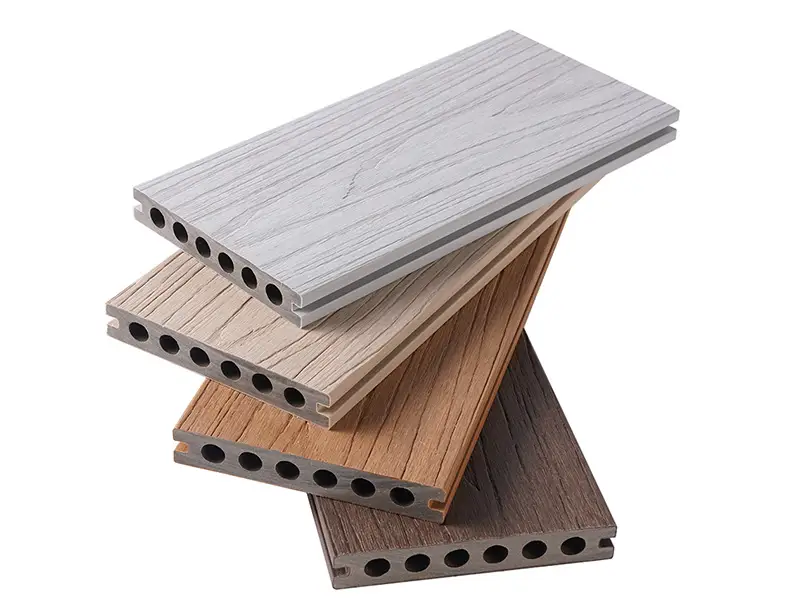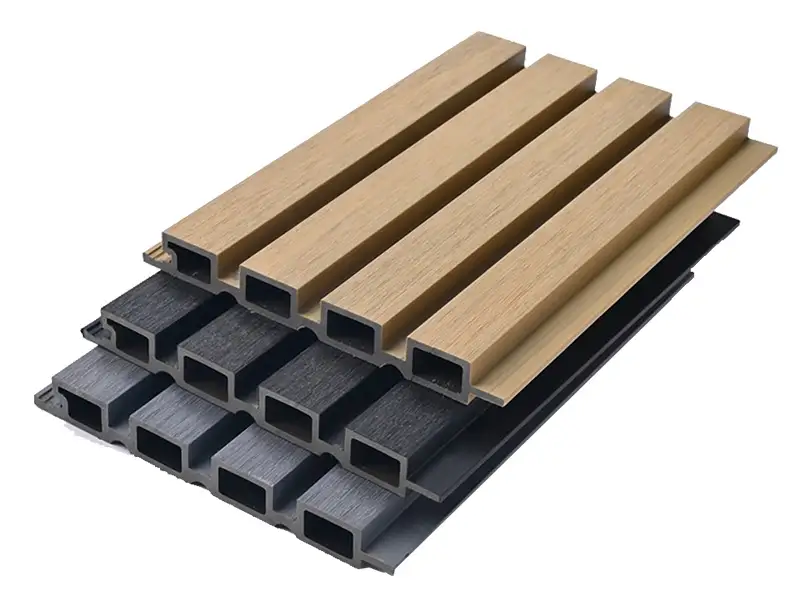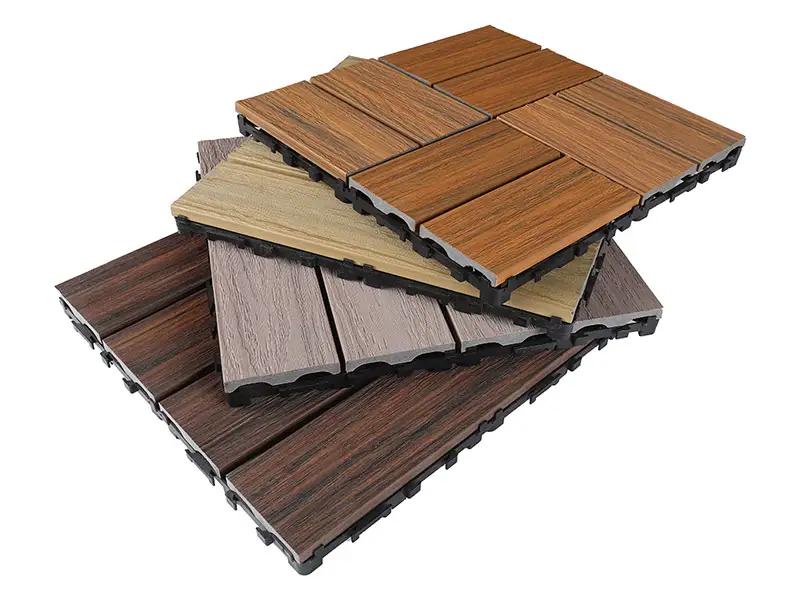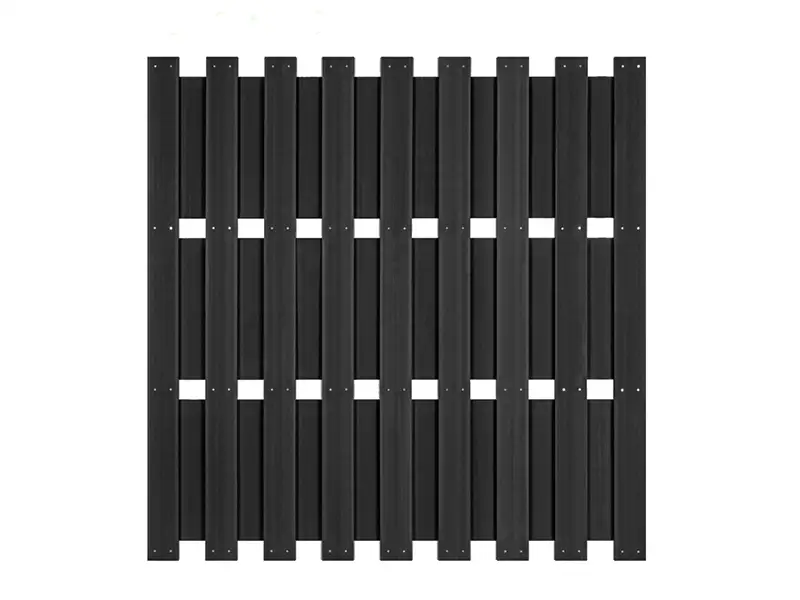
When sourcing Wholesale Composite Decking, price is only one part of the decision.
For importers, distributors, and building material brands, selecting the right Composite Decking Manufacturer directly affects product quality, delivery reliability, customer satisfaction, and long-term profitability. A supplier offering the lowest quotation today may end up costing far more through inconsistent quality, delayed shipments, warranty claims, or limited customization capabilities.
As global demand for sustainable outdoor building materials continues to grow, more buyers are shifting from traditional wood decking to Bulk Composite Decking solutions. At the same time, competition in local markets is increasing, making product differentiation and supply chain reliability more important than ever.
Whether you are sourcing for a distribution business, a retail chain, a construction project, or your own private brand, understanding how to evaluate a Composite Decking Supplier before placing an order can significantly reduce purchasing risks.
This guide walks you through every critical stage of wholesale sourcing—from defining product specifications and assessing manufacturing capabilities to quality inspection, OEM customization, production planning, and long-term supplier partnerships. Instead of focusing only on price, you’ll learn how experienced buyers make purchasing decisions that support sustainable business growth.
Define Your Wholesale Composite Decking Requirements Before Contacting Suppliers
One of the biggest mistakes buyers make is requesting quotations before fully defining their product requirements.
Although many manufacturers can produce similar-looking decking boards, their materials, structural designs, manufacturing standards, and customization capabilities vary significantly. Without a clear specification, quotations become difficult to compare, increasing the risk of ordering products that fail to meet market expectations.
Professional buyers typically establish detailed purchasing requirements before contacting any Composite Decking Factory.
These requirements generally include:
Product Structure
- Hollow or solid decking
- Traditional or co-extrusion technology
- Residential or commercial grade
- Standard or heavy-duty profile
Material Performance
- UV resistance
- Slip resistance
- Water absorption
- Fire rating
- Weather resistance
- Load-bearing capacity
Dimensions
- Length
- Width
- Thickness
- Profile design
Surface Finish
- Wood grain
- Brushed
- Sanded
- 3D embossed
- Co-extruded finish
Color Options
- Standard colors
- Customized colors
- Color consistency requirements
Installation System
- Hidden fasteners
- Starter clips
- Edge trims
- Joists
- Matching accessories
Many experienced distributors now prefer Custom Composite Decking instead of standard products because unique profiles, colors, and packaging help differentiate their brands and reduce direct price competition.
Expert Tip
Before requesting quotations, prepare a complete product specification sheet. This allows manufacturers to provide accurate pricing, realistic production schedules, and suitable technical recommendations.
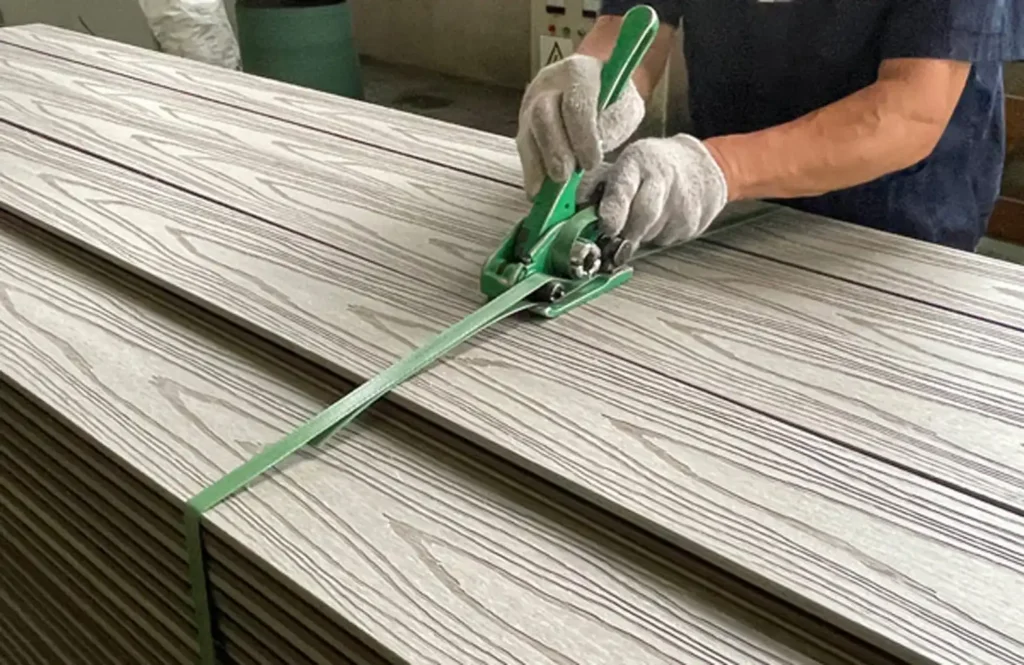
Buyer's Specification Checklist
Before requesting a quotation, confirm the following:
✅ Product application
✅ Decking profile
✅ Dimensions
✅ Surface finish
✅ Color
✅ Loading requirements
✅ Required certifications
✅ Matching accessories
✅ Packaging requirements
✅ Private label requirements
A well-prepared specification sheet shortens communication time, reduces misunderstandings, and improves quotation accuracy.
How to Identify a Reliable Composite Decking Manufacturer Instead of Just Another Supplier
Quality Management System
Consistent product quality begins long before production starts.
A reliable Composite Decking Manufacturer should have standardized quality management procedures covering raw material selection, formulation control, extrusion, surface treatment, packaging, and final inspection.
Instead of relying solely on visual inspections, experienced manufacturers invest in laboratory testing to verify critical performance indicators, including:
- Density consistency
- Water absorption
- Flexural strength
- UV weathering performance
- Slip resistance
- Thermal expansion
- Color consistency
- Impact resistance
These tests help ensure that products perform consistently under different environmental conditions and comply with project specifications.
At Supereco, quality control is supported by a CNAS-accredited laboratory, allowing both in-house and third-party testing throughout the production process. Every production batch follows strict inspection procedures before shipment, helping customers reduce warranty risks and maintain consistent product performance in their local markets.
Export Experience Matters More Than Many Buyers Realize
Manufacturing a high-quality decking board is only part of successful international business.
Understanding international packaging standards, container loading optimization, export documentation, customs requirements, and logistics coordination is equally important.
Manufacturers with extensive export experience are generally better prepared to anticipate common issues before they become costly problems.
Over the years, Supereco has supplied Wholesale Composite Decking solutions to customers in more than 70 countries, supporting distributors, wholesalers, contractors, and private-label brands across diverse climate zones and market requirements.
This international experience enables the team to provide practical recommendations on product selection, packaging methods, loading plans, and documentation based on each customer’s destination market.
Expert Tip
When evaluating a supplier, ask how many countries they currently export to and request examples of projects or long-term distribution partners. Export experience often reflects the maturity of a manufacturer’s production management and international service capabilities.
The Hidden Costs Buyers Often Overlook When Sourcing Wholesale Composite Decking
Many purchasing decisions are based almost entirely on unit price.
However, experienced importers understand that the lowest quotation does not always result in the lowest total purchasing cost.
In fact, some of the most expensive sourcing mistakes occur after production begins—not before.
Before selecting a Composite Decking Supplier, evaluate the total cost of ownership rather than simply comparing FOB prices.
Hidden Cost #1 — Inconsistent Product Quality
Small variations in board dimensions, color consistency, or surface texture can significantly increase installation time and generate customer complaints.
Replacing defective products after international shipment is far more expensive than preventing quality issues during manufacturing.
Choosing an experienced Composite Decking Factory with standardized production systems can greatly reduce these risks.
Hidden Cost #2 — Limited Production Capacity
Many buyers only discover production bottlenecks after placing an order.
Factories operating with limited equipment may struggle during peak construction seasons, leading to shipment delays that affect downstream distributors, contractors, and project schedules.
Manufacturers with strong production capacity are better positioned to maintain stable lead times, even during periods of high demand.
With over 120 automated production lines and an annual production capacity exceeding 100,000 tons, Supereco is able to support long-term supply programs, recurring wholesale orders, and large commercial projects while maintaining production stability.
For distributors managing seasonal inventory, predictable delivery schedules are often more valuable than marginal price differences.
Hidden Cost #3 — Missing Accessories
Some quotations include only decking boards.
However, a complete decking system typically requires compatible installation components such as:
- Hidden clips
- Starter clips
- Stainless steel screws
- Aluminum joists
- Plastic joists
- Edge trims
- Fascia boards
Purchasing accessories from multiple suppliers can create compatibility issues and increase logistics costs.
Working with a manufacturer capable of supplying a complete decking system simplifies procurement while ensuring all components are designed to work together.
Hidden Cost #4 — Poor Packaging
Packaging is frequently underestimated.
Inadequate packaging can lead to damaged products, higher claim rates, and increased warehouse handling costs.
Professional Bulk Composite Decking suppliers should offer packaging solutions designed specifically for container transportation and long-distance international shipping.
For distributors developing their own brands, customized packaging also improves market presentation and strengthens brand recognition.
Hidden Cost #5 — Limited Customization Capability
As competition intensifies, selling identical products becomes increasingly difficult.
Many distributors are moving away from standard products and investing in Custom Composite Decking programs that include:
- Exclusive colors
- Customized profiles
- Private-label branding
- Branded packaging
- Matching accessories
- Product differentiation
Rather than competing solely on price, customized products allow distributors to build stronger brand identity and achieve healthier profit margins.
Key Takeaways
When comparing quotations from different Composite Decking Manufacturers, evaluate more than just the product price.
Consider the complete sourcing picture, including:
| Evaluation Factor | Why It Matters |
|---|---|
| Manufacturing capability | Ensures stable supply and long-term cooperation |
| Quality control system | Reduces warranty claims and customer complaints |
| Production capacity | Supports bulk orders and peak-season demand |
| Export experience | Minimizes shipping and documentation issues |
| OEM customization | Helps differentiate your brand in competitive markets |
| Complete accessory system | Simplifies procurement and installation |
| Packaging quality | Protects products during international transportation |
Professional buyers don’t simply purchase decking—they build reliable supply chains.
How Custom Composite Decking Creates a Competitive Advantage for Your Business
In today’s building materials market, selling the same products as everyone else often leads to one outcome—price competition.
Many distributors find that standard decking products quickly become commoditized. Customers compare prices across multiple suppliers, profit margins shrink, and it becomes increasingly difficult to build long-term customer loyalty.
This is one of the main reasons why more importers are choosing Custom Composite Decking instead of standard catalog products.
Customization is no longer limited to changing colors. It has become a strategic way for distributors to differentiate their brands, serve niche markets, and create products that competitors cannot easily replicate.
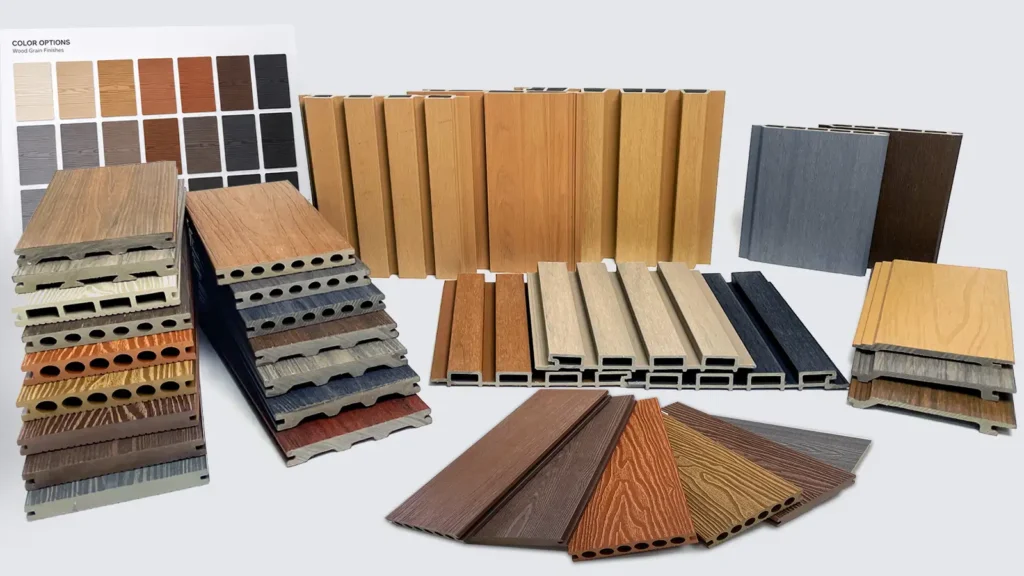
Beyond Colors: What Can Actually Be Customized?
A professional Composite Decking Manufacturer should be able to support customization across multiple aspects of the product, including:
Product Profiles
Different markets often require different structural designs.
Examples include:
- Solid decking for heavy commercial projects
- Hollow decking for residential applications
- Heavy-duty structural profiles
- Wide-board designs
- Slim-profile systems
Custom profiles can also be developed to meet specific engineering or architectural requirements.
Surface Finishes
Surface appearance has become an important purchasing factor.
Popular finishes include:
- Traditional wood grain
- Deep embossed texture
- Wire-brushed finish
- Sanded surface
- Co-extruded premium finish
Different textures provide different visual effects while also influencing slip resistance and maintenance performance.
Custom Colors
Color trends vary considerably between regions.
For example:
- North America often favors gray and walnut tones.
- Europe prefers natural oak and teak finishes.
- Australia has strong demand for darker colors with enhanced UV stability.
- Middle Eastern markets frequently require colors that perform well under intense sunlight.
Instead of relying solely on standard color collections, many manufacturers now offer customized color matching to align products with local market preferences or established brand identities.
Matching Installation Systems
Professional buyers increasingly prefer sourcing complete decking systems rather than individual boards.
A complete solution typically includes:
- Hidden fasteners
- Starter clips
- Stainless steel screws
- Aluminum joists
- Plastic joists
- Fascia boards
- Edge trims
- Stair nosings
Purchasing compatible accessories from the same Composite Decking Factory helps simplify procurement, reduce installation issues, and improve overall project consistency.
Private Label & Packaging
For distributors building their own brands, packaging is often as important as the product itself.
A complete OEM program may include:
- Private labels
- Custom logos
- Branded packaging
- Instruction manuals
- Barcode labels
- Retail-ready cartons
- Marketing support materials
Rather than selling another factory’s brand, distributors can establish stronger market recognition under their own identity.
Why OEM Manufacturing Matters
Many buyers initially focus on obtaining the lowest factory price.
Experienced distributors think differently.
They focus on building a product that customers cannot easily compare.
Working with a Composite Decking Manufacturer offering comprehensive OEM services allows businesses to create differentiated product portfolios while strengthening customer loyalty and protecting profit margins.
At Supereco, OEM manufacturing extends beyond simple logo printing.
Our engineering and production teams work closely with customers to develop Custom Composite Decking solutions tailored to local market requirements, including customized profiles, exclusive colors, coordinated accessories, private-label packaging, and complete decking systems.
For distributors seeking sustainable growth rather than short-term price competition, customization becomes an investment rather than an additional cost.
Expert Insight
The most successful distributors rarely compete on price alone. They compete through differentiated products, reliable supply chains, and recognizable brands.
How to Evaluate Manufacturing Capacity Before Placing a Bulk Order
Production capacity is often overlooked during supplier selection.
Many buyers assume that if a factory provides a competitive quotation, it can also deliver orders on time.
Unfortunately, this is not always the case.
Seasonal demand, equipment limitations, labor shortages, and production scheduling all influence a manufacturer’s ability to fulfill wholesale orders consistently.
For distributors and project contractors, delayed shipments can disrupt inventory planning, postpone installations, and ultimately affect customer relationships.
Before selecting a Composite Decking Supplier, it is essential to evaluate whether the manufacturer has the capacity to support your long-term business—not just your first order.
Questions Every Buyer Should Ask
Instead of asking only about price, experienced buyers typically ask:
- How many production lines are currently operating?
- What is the factory’s annual production capacity?
- Can multiple product models be manufactured simultaneously?
- How are peak-season orders managed?
- Is there a dedicated production plan for long-term customers?
- How is production quality maintained across different batches?
The answers to these questions reveal far more about a supplier’s reliability than a quotation alone.
Why Production Scale Matters
Large-scale manufacturing is not simply about producing more products.
It creates operational advantages that directly benefit wholesale buyers.
These advantages include:
- More stable lead times
- Better production scheduling
- Higher consistency between batches
- Faster response to urgent orders
- Improved inventory planning
- Greater flexibility for OEM projects
At Supereco, manufacturing capability is supported by:
| Manufacturing Capability | Customer Benefit |
|---|---|
| 20+ years of manufacturing experience | Proven expertise in serving global wholesale markets |
| 120+ automated production lines | Stable production schedules and reliable delivery performance |
| 100,000+ tons annual production capacity | Ability to support recurring wholesale programs and large-scale commercial projects |
| Factory-direct manufacturing | Better cost control, direct technical communication, and flexible OEM development |
For buyers planning annual purchasing programs rather than one-time orders, these capabilities help build a more resilient and dependable supply chain.
Think Beyond Your First Container
Choosing a supplier is not only about today’s order.
It is about whether that manufacturer can still support your business after five, ten, or even fifty containers.
Reliable production capacity becomes increasingly valuable as your distribution network grows.
The goal is not simply to find a supplier—it is to establish a manufacturing partner capable of supporting your business over the long term.
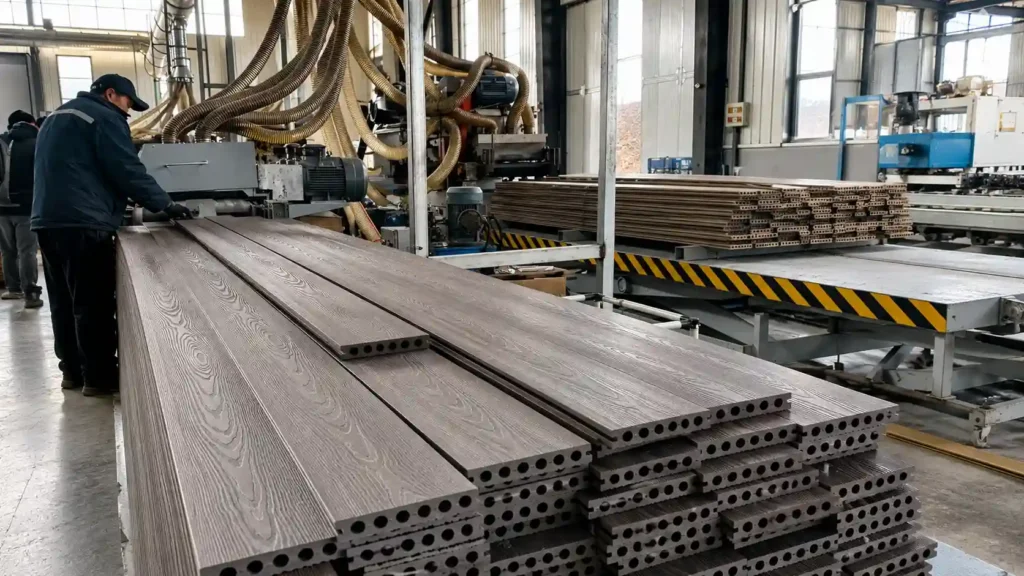
Quality Control: What Wholesale Buyers Should Always Verify Before Shipment
Quality problems are among the most expensive risks in international sourcing.
Unlike domestic purchases, replacing defective products after international shipment involves significant costs, including freight, installation delays, customer complaints, and warranty claims.
For this reason, experienced importers evaluate a manufacturer’s quality management system before placing an order—not after receiving the goods.
A Reliable Quality System Starts with Raw Materials
Consistent product performance begins with consistent raw materials.
Professional manufacturers should implement standardized procedures for selecting and testing:
- Wood fiber quality
- Polymer composition
- Additives and stabilizers
- UV-resistant pigments
- Moisture content
- Material consistency
Variations at this stage can directly affect product strength, color stability, and long-term durability.
Process Control Matters Just as Much
Quality cannot be “inspected into” a product after production.
It must be controlled throughout every manufacturing stage.
Key inspection points typically include:
- Material mixing
- Extrusion temperature
- Cooling process
- Profile dimensions
- Surface treatment
- Color consistency
- Packaging inspection
Factories with standardized operating procedures are generally more capable of delivering consistent products across large production batches.
Why Laboratory Testing Adds Confidence
Visual inspection alone cannot verify long-term product performance.
Professional manufacturers invest in laboratory testing to evaluate critical performance characteristics before products leave the factory.
Typical testing includes:
- Flexural strength
- Water absorption
- Impact resistance
- UV weathering
- Slip resistance
- Thermal expansion
- Fire performance
- Dimensional stability
At Supereco, product performance is verified through a CNAS-accredited laboratory, supported by both in-house testing and independent third-party verification when required.
This systematic approach provides distributors with greater confidence when supplying demanding commercial projects and international markets.
Final Buyer's Inspection Checklist
Before approving shipment, confirm that the manufacturer has provided:
Product specification confirmation
Color approval samples
Dimensional inspection records
Laboratory testing reports
Packaging photographs
Container loading photographs
Quantity verification
Final quality inspection report
Completing these checks before shipment significantly reduces the likelihood of costly post-delivery issues.
Professional Recommendation
The best wholesale partnerships are built on transparency. A manufacturer willing to share testing procedures, production records, and inspection reports is generally more prepared to support long-term business relationships than one competing on price alone.
MOQ, Lead Time & Container Loading: What Every Wholesale Buyer Should Know
Once product specifications have been finalized and the right Composite Decking Manufacturer has been selected, buyers typically move on to three practical questions:
What is the minimum order quantity?
How long will production take?
How much product can fit into one container?
These factors directly influence inventory planning, purchasing budgets, and project schedules.
Understanding them in advance helps avoid delays, unexpected costs, and communication issues during production.
Understanding MOQ
Minimum Order Quantity (MOQ) varies depending on:
- Product profile
- Surface finish
- Standard or customized colors
- OEM requirements
- Packaging specifications
Standard products usually require lower MOQs because production molds and raw materials are already available.
For Custom Composite Decking, MOQ may increase due to customized color matching, profile development, packaging, or private-label production.
Professional manufacturers should always explain the reason behind MOQ requirements rather than simply providing a number.
Production Lead Time
Lead time depends on several factors:
- Production schedule
- Order quantity
- Product complexity
- Raw material availability
- Peak-season demand
Wholesale buyers should always confirm:
- Production start date
- Estimated completion date
- Inspection schedule
- Shipping date
Manufacturers with stable production systems and automated production lines generally provide more predictable delivery schedules.
Container Loading Optimization
Container utilization has a direct impact on transportation cost.
Professional manufacturers should help buyers optimize:
- Board length
- Packaging dimensions
- Loading efficiency
- Mixed product loading
- Accessory placement
Efficient loading reduces freight costs while maximizing product quantity per container.
Rather than treating logistics as an afterthought, experienced Composite Decking Suppliers integrate packaging, production, and container planning into a single sourcing solution.
10 Questions Every Importer Should Ask Before Choosing a Composite Decking Factory
Selecting the right manufacturing partner is one of the most important decisions in the wholesale purchasing process.
Before placing an order, every buyer should have clear answers to the following questions.
Buyer's Evaluation Checklist
✔ How many years has the factory specialized in composite decking manufacturing?
✔ Does the factory own its production facilities?
✔ What is the annual production capacity?
✔ Can the manufacturer support OEM and Custom Composite Decking projects?
✔ Does the factory have its own quality laboratory?
✔ Which international certifications are available?
✔ Can complete installation accessories be supplied together?
✔ How are product quality and color consistency controlled?
✔ What warranty is provided?
✔ Can the manufacturer support long-term supply programs?
These questions help buyers evaluate long-term reliability rather than short-term pricing.
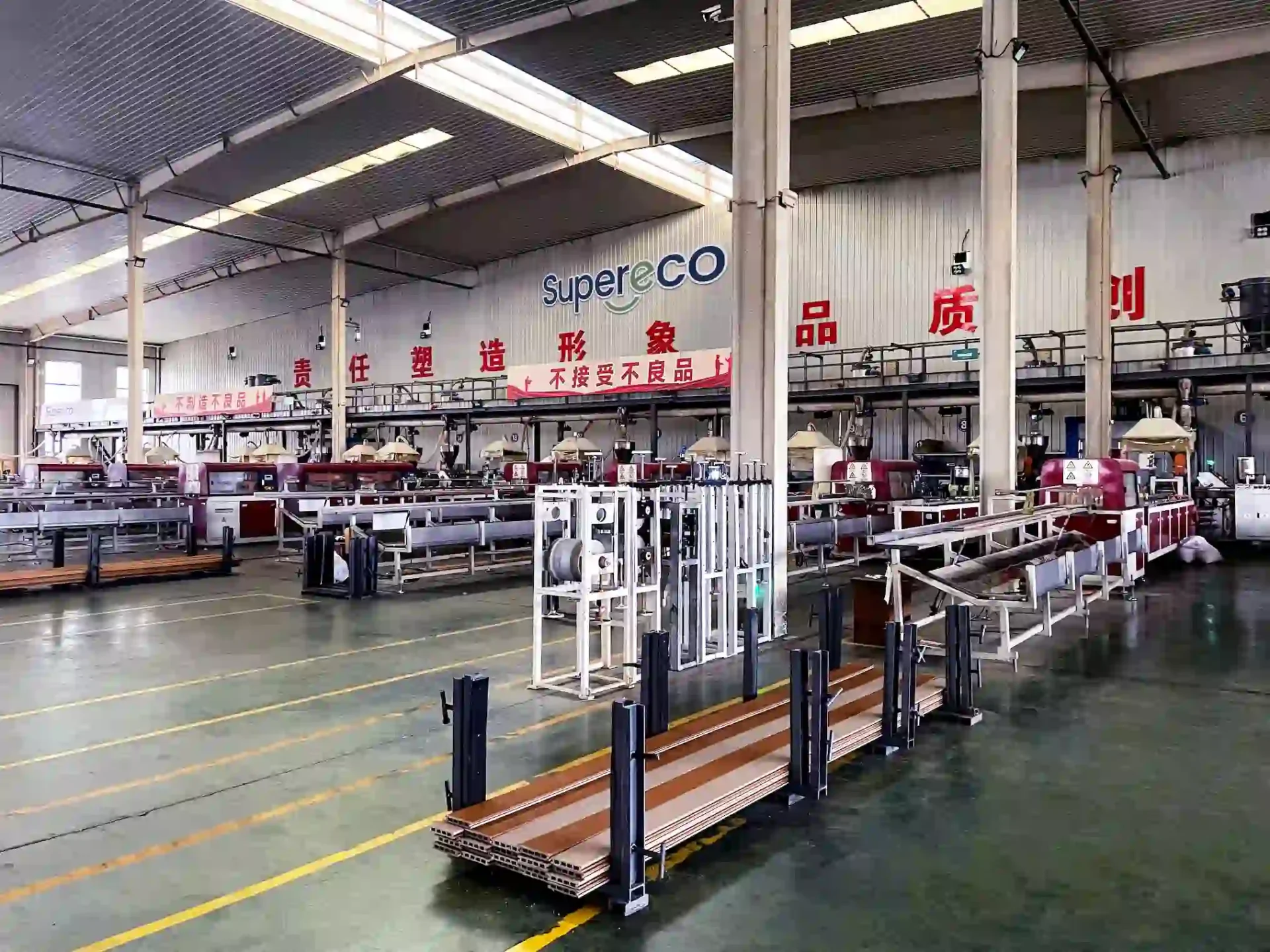
Why More Global Buyers Are Building Long-Term Factory Partnerships
One-time purchasing focuses on price.
Long-term sourcing focuses on stability.
Many successful distributors no longer change suppliers every year.
Instead, they build strategic partnerships with manufacturers capable of supporting their business growth over many years.
Long-term cooperation offers several advantages:
- Consistent product quality
- Stable color matching across production batches
- Predictable lead times
- Better inventory planning
- Priority production scheduling
- Continuous OEM product development
- Lower operational risk
Rather than negotiating every shipment from the beginning, both parties continuously improve efficiency through experience and collaboration.
At Supereco, many customers begin with a trial container before gradually expanding into long-term purchasing programs covering multiple product categories, customized decking systems, and private-label manufacturing.
Supported by more than 20 years of manufacturing experience, 120+ automated production lines, 100,000+ tons annual production capacity, a CNAS-accredited laboratory, and customers across 70+ countries, Supereco is committed to becoming a manufacturing partner—not simply another supplier.
Our capabilities include:
- Factory-direct OEM manufacturing
- Custom Composite Decking development
- Customized colors and profiles
- Matching installation accessories
- Private-label packaging
- Technical support
- Stable global supply programs
For distributors seeking sustainable growth, a reliable manufacturing partner can become one of the strongest competitive advantages in the market.
Ultimate Wholesale Composite Decking Buyer's Checklist
Before placing your next order, confirm that you have completed the following:
| Checklist | Status |
|---|---|
| Product specifications finalized | |
| Manufacturer capability verified | |
| Factory audit completed | |
| Quality system reviewed | |
| Samples approved | |
| OEM requirements confirmed | |
| Accessories included | |
| Packaging approved | |
| Container loading plan confirmed | |
| Production schedule agreed | |
| Inspection arranged | |
| Warranty confirmed |
Saving this checklist can help reduce sourcing risks and improve purchasing efficiency for every wholesale order.
Conclusion
If you’re looking for a trusted WPC Decking Manufacturer that combines large-scale production, rigorous quality control, and flexible OEM capabilities, Supereco is ready to support your business.
From Wholesale WPC Decking and Bulk Composite Decking supply to Custom Composite Decking, factory-direct manufacturing, customized profiles, colors, matching accessories, and private-label solutions, we help distributors and brands build reliable supply chains with confidence.
Recommended Reading
- All Posts
- Blog
- Composite Decking
- Slat Wall Panel
- SPC Floor
- WPC Wall
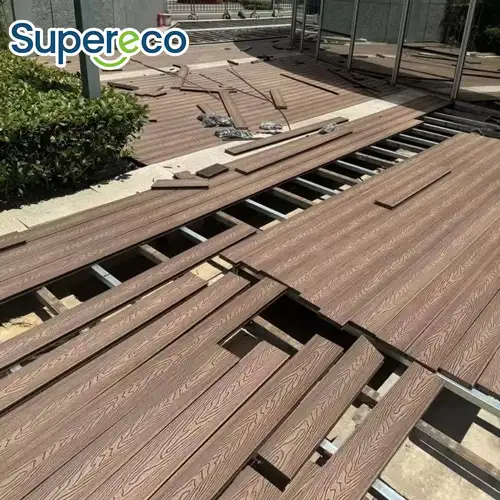
Commercial composite decking projects require more than simply selecting boards and sending them to the job site. For contractors, project developers, importers, distributors, and building-material buyers, the key concerns are
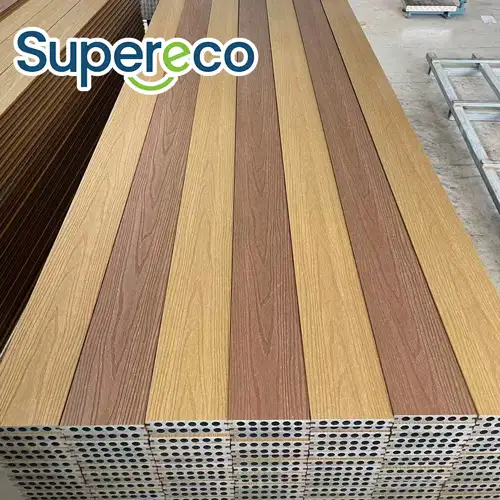
For B2B buyers, choosing a composite decking supplier for long-term supply means evaluating product consistency, supply continuity, production capacity, repeat-order support, and order execution—not just the first shipment. A distributor
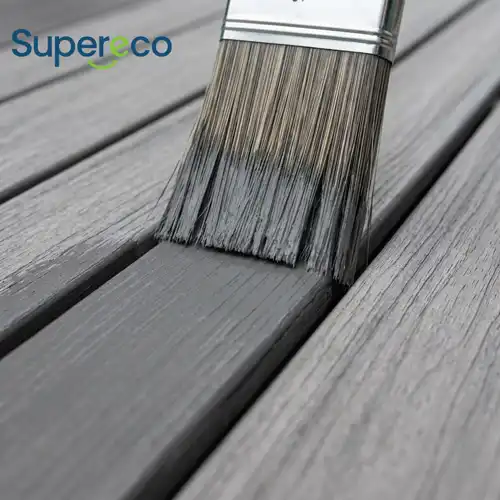
Yes, some composite decking can be painted, but it depends on the type of board and its surface. Older-generation uncapped composite decking may be suitable for painting in certain situations,
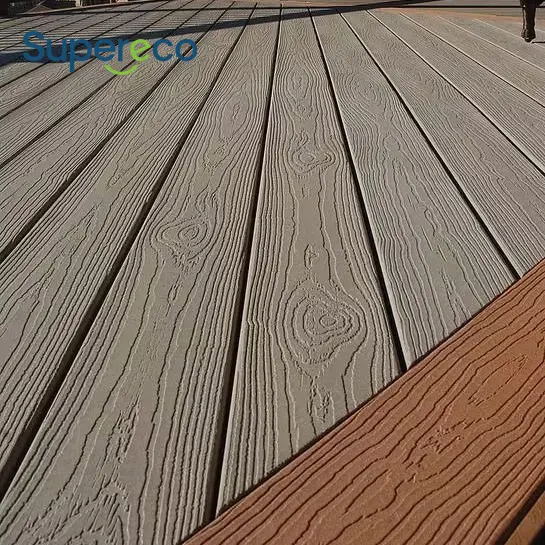
Composite decking has become an established alternative to traditional timber decking across residential developments, commercial properties, hospitality projects, public spaces, and outdoor infrastructure. For wholesale buyers, however, choosing composite decking
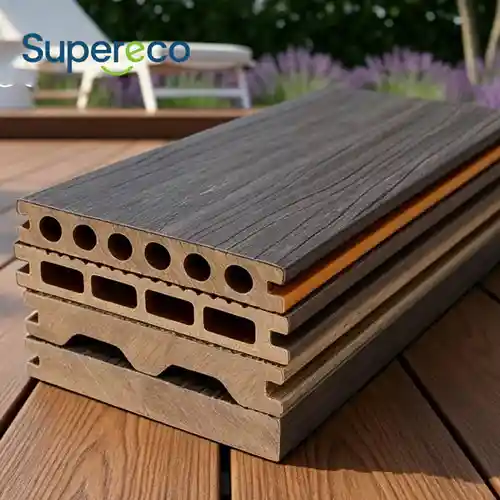
Choosing between solid and hollow composite decking is a common decision for importers, distributors, contractors, and project buyers. The right profile affects more than board weight. It can influence material
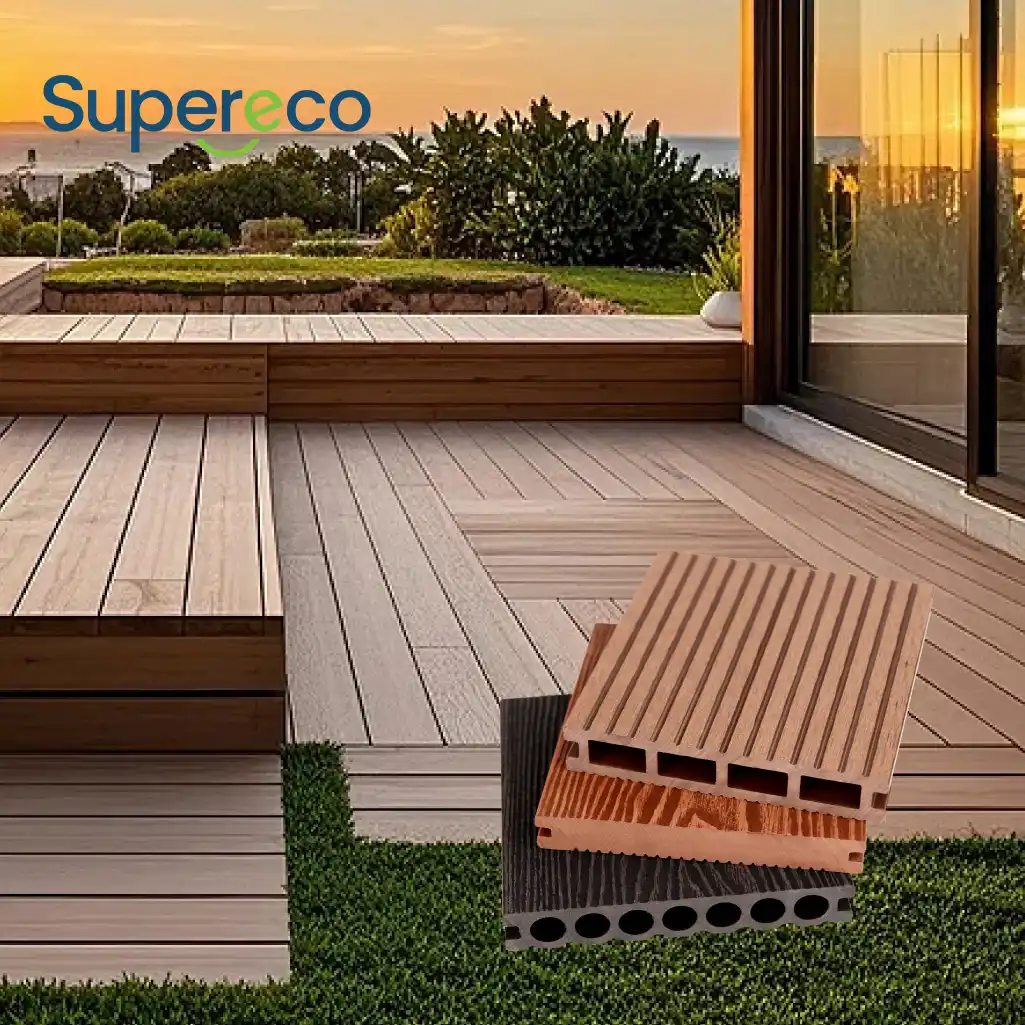
Traditional and capped composite decking are two major constructions available in today’s WPC decking market. For importers, distributors, contractors, and project buyers, the decision is not simply about choosing the